


Professional cyclists are among the fittest, most health-conscious athletes in the world. Tobacco and nicotine, two of the most addictive legal substances, are more commonly associated with cancer warnings and long-term health risks than elite performance. So you’d be forgiven for thinking the pro peloton would be the last place you'd find them. However, the reality is that both are surprisingly common among professional athletes, and cyclists are no different.
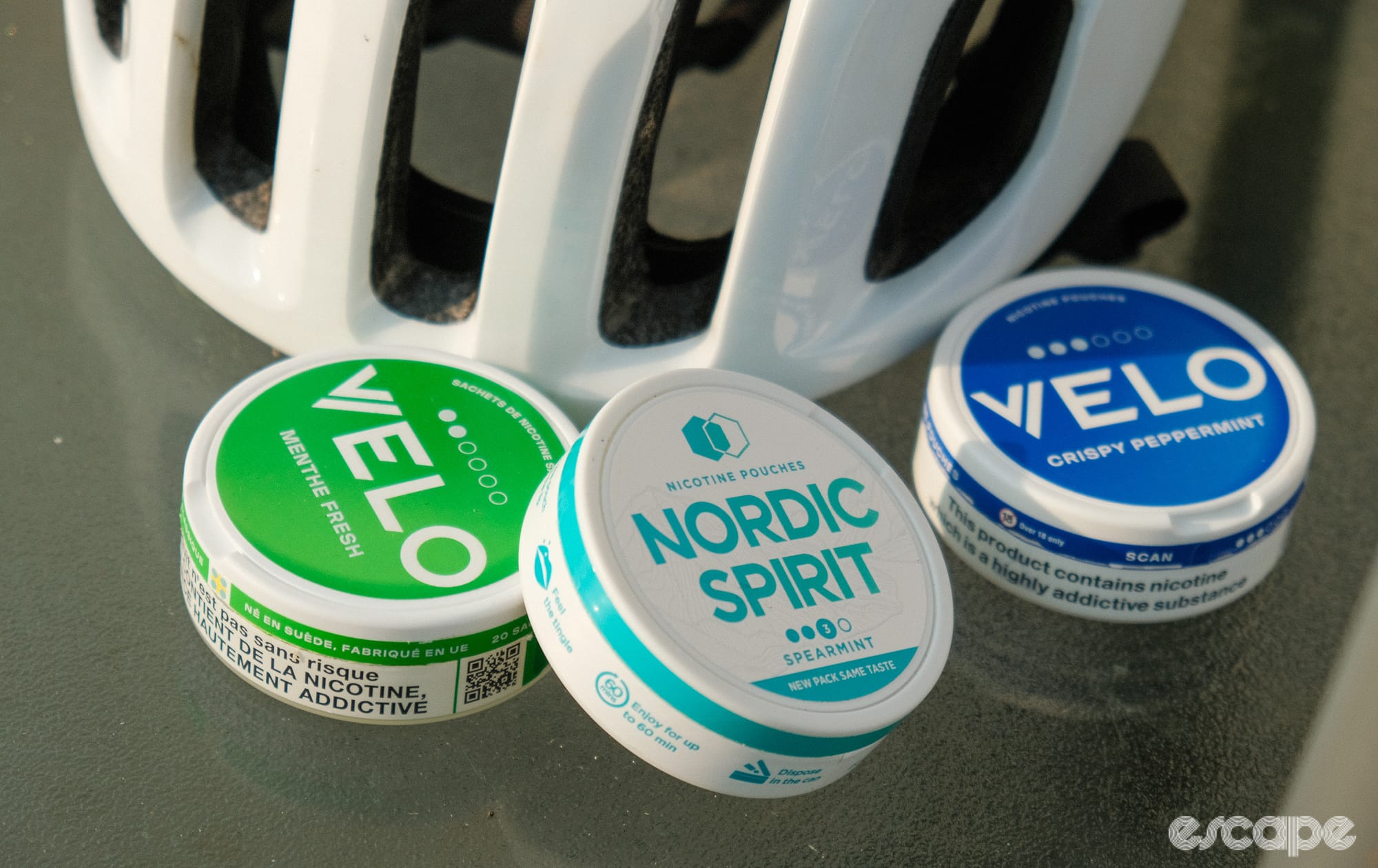
We aren't talking cigarettes or smoking like was common for riders in the early years of the Tour de France, but rather snus and nicotine pouches placed discreetly under the lip. You may have noticed the small, round, tubs they come in behind shop counters near cigarettes and other tobacco products. (The terms snus and nicotine pouches aren't strictly synonymous, as outlined below.)
Both products, once largely a Scandinavian curiosity, are now a growing concern around the world. Discreet, smokeless, and delivering a fast hit of nicotine straight into the bloodstream through the gum, they offer a quick fix of the highly addictive drug.
And they have a surprising following among athletes. Reports suggest their use in football is widespread, and while anecdotal evidence suggests cyclists don't seem to use them at the same rate, if around the pro cycling scene long enough and you are likely to come across them at some point. But “stink,” as I've sometimes heard it referred to, is far from new in the pro peloton. I first heard and tried snus in 2007, when its use was already widespread among the peloton.
Speaking to riders you’ll hear the same story on repeat: “Rider X is a ‘snus head’” or, “He’s your guy to get some.” You can spot it, if you know what to look for. A bulge under the upper lip is usually a telltale sign, but the perfectly round outline of a tin, visible in a trouser pocket, is another key giveaway.
In this article, I try to answer the simple question I’ve had for almost 20 years: Why are professional cyclists using snus and nicotine pouches? Is it a problem and is the sport is ready to acknowledge? And, finally, how does nicotine affect performance.

What is snus?
Before trying to explain why pro cyclists are using these products, it’s worth clarifying exactly what we’re talking about and why the distinction between each matters.
Snus
Snus (pronounced 'snoos,' not 'snuss') is a moist, smokeless tobacco product that originated in Sweden. It typically comes in small pouches designed to be placed between lip and gum, where the nicotine is absorbed through the oral mucosa. Because it contains tobacco, snus is classified as a tobacco product and is banned for sale (but not possession) in the UK and much of Europe, with notable exceptions like Sweden and Norway, where it remains culturally ingrained and legally protected, and Switzerland.
It’s worth taking a moment here to outline the difference between tobacco and nicotine, which are closely linked but not the same thing. Tobacco refers to the plant itself, or more precisely, its dried and processed leaves, which are used in products like cigarettes, cigars, and snus. Nicotine, on the other hand, is the naturally occurring psychoactive compound found in the tobacco plant that produces the stimulant and addictive effects.
Nicotine pouches
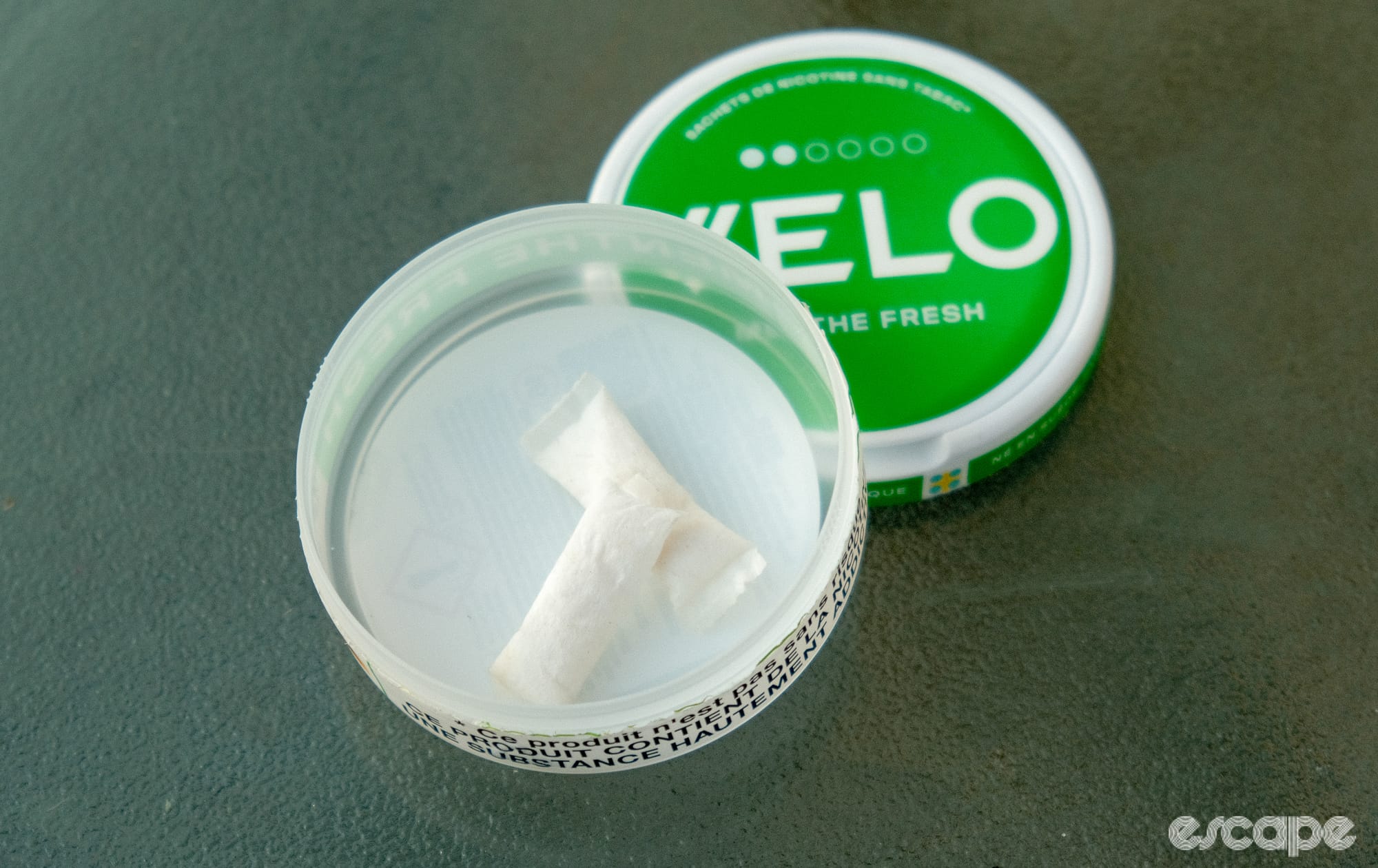
Nicotine pouches look and function almost identically to snus but while marketed as tobacco-free, they still often contain nicotine extracted from tobacco, just without the leaf.
Instead, they deliver nicotine via a blend of plant fibres, flavourings, and sweeteners. These pouches are entirely legal across the UK and Europe (with the exception of The Netherlands). Although they don’t contain the tar, combustion byproducts, or many of the carcinogens found in traditional tobacco products, they still deliver the same addictive drug, and the risks that come with it.
These nicotine pouches have exploded in popularity in recent years, especially among younger consumers and athletes. This has lead to concerns they might be creating a new wave of nicotine addicts and sucking a generation into a smoking habit they might otherwise have avoided.
Nicotine pouches are marketed as a “cleaner” and more socially acceptable alternative to smoking or vaping – no smoke, no smell, and barely a visually obvious indication a person is even using it.
How widely is nicotine used in sport?
Both nicotine and tobacco are legal for use in sport. Neither is currently regulated by the World Anti-Doping Agency or signatories to its anti-doping code such as Olympic sports, although nicotine has been in WADA's monitoring program since 2012; a WADA-funded study found the substance in 15% of athlete anti-doping samples that were tested for the project.
For endurance athletes, snus and nicotine pouches offer a way to get a controlled nicotine dose without the respiratory consequences of smoking. Yet despite the slick branding and tobacco-free claims, these products still carry well-established risks. Nicotine is highly addictive, impacts heart rate and blood pressure, and has known effects on sleep, mood, and recovery. The nicotine, flavourings, and other ingredients can also damage gums.
Cyclists, of course, are deeply attuned to their health and any potential physiological marginal gains or losses, and so these risks raise uncomfortable questions. The most basic of which is just: why use nicotine at all? What place does a stimulant with known links to addiction, cancer, and sleep disruption have in this environment? Is this a harmless vice in a sport defined by its stress and suffering, or is cycling quietly nurturing a new, legal form of dependency?
One current WorldTour rider I spoke with estimated as many as a third of the roster of one team he rode for used “snus” (a general reference to snus and nicotine pouches), and theorised it gained popularity in the peloton as a way to suppress appetite, particularly during an era when extreme weight reduction and chronic under-fueling were seen as essential for performance. Back then, hunger was a constant challenge, and nicotine offered a quick, legal fix to blunt it. But as modern fueling strategies have shifted towards eating more to support performance and recovery, riders are now more satiated more of the time and therefore less likely to turn to nicotine as an appetite suppressant.
Riders' estimates of the prevalence of snus differs from management's estimates in some cases. A second WorldTour pro I spoke with estimated between 20 and 50% of his current team use snus but a director at the same team thought none of the team's riders were users.
Did we do a good job with this story?