

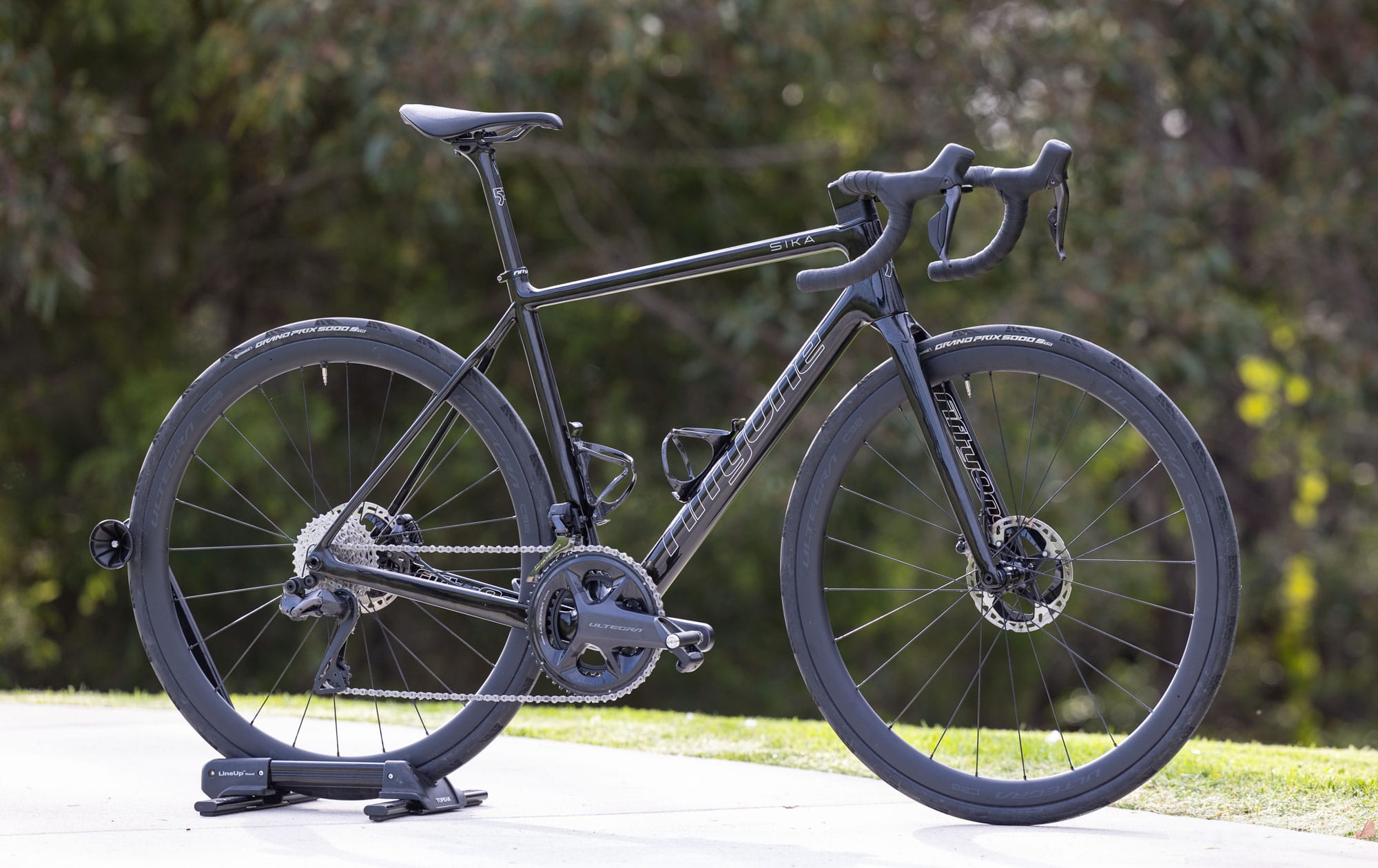


Modern bikes are increasingly blurring the lines that define them. The latest crop of endurance road bikes often have tyre clearance that overlaps with gravel race bikes. All-road increasingly seems to be a moniker used to describe a gravel bike with insufficient tyre clearance. And there are many others edging into the realm of difficult description.
Among that confusion is a category of race-inspired road bikes that offer a fit geometry somewhere between what a pro seeks and what a leisurely endurance bike offers. A geometry that is more suitable to anyone currently riding a race bike with a stack of stem spacers. Bikes of this category include the BMC Roadmachine, Cervelo Caledonia, and Giant Defy.
Another for that list is the FiftyOne Sika road bike. Based in Ireland, FiftyOne has its roots in handmade and custom tube-to-tube carbon frames, an approach that taught the company plenty about the features and fit its customers seek. A few years back, the brand branched into high-end Asian-made production models of its own designs, starting with the Assassin gravel bike, and now, the Sika road bike.
Having built this bike up from a frameset in late 2024, this is a long-term review of what’s proved to be a highly interesting option in the premium segment. In that time, I’ve tested the bike with various tyre widths, all the way up to the recommended maximum of 700 x 40 mm. As I’ll explain, there’s a lot to like here …
Lows: Fork exhibits some flex when pulling on the bars, no choice in seatpost setback (but a standard round shape leaves option wide open), frame over claimed weight.
The basics
On paper, the Sika is similar to several other modern road bikes. There’s a proprietary aero-shaped one-piece handlebar that integrates cleanly into the sculpted front end of the frame. That full-carbon frame features not-quite-round tubes with flattened back sides. And there’s a clear logo occupying the down tube.
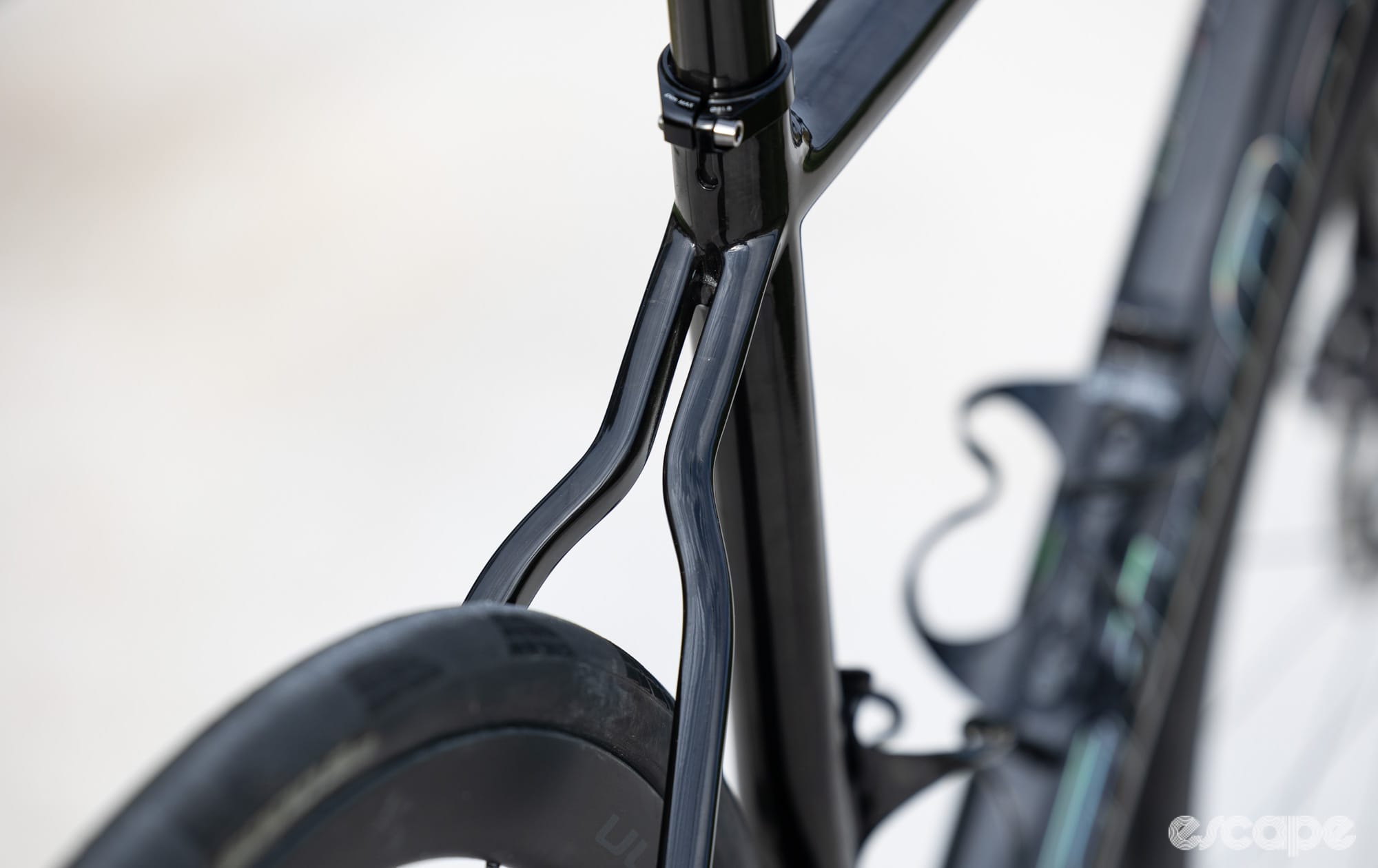
Where things differ is in FiftyOne’s merging of traditional design with the modern. While so many modern bikes have dropped seatstays, the Irish brand has stuck with its signature open wishbone design that connects near the top of the seat tube. That seat tube is also traditional, featuring an external round clamp that holds a standard 27.2 mm round seatpost.
Breaking the traditional lines are some subtly dropped chainstays and a long-legged fork with the blades sitting proud of the shallow crown (more significant on the three smaller frame sizes.) Both of these design choices give room for an official 700 x 40 mm tyre capacity, which opens the bike up beyond pure road use.
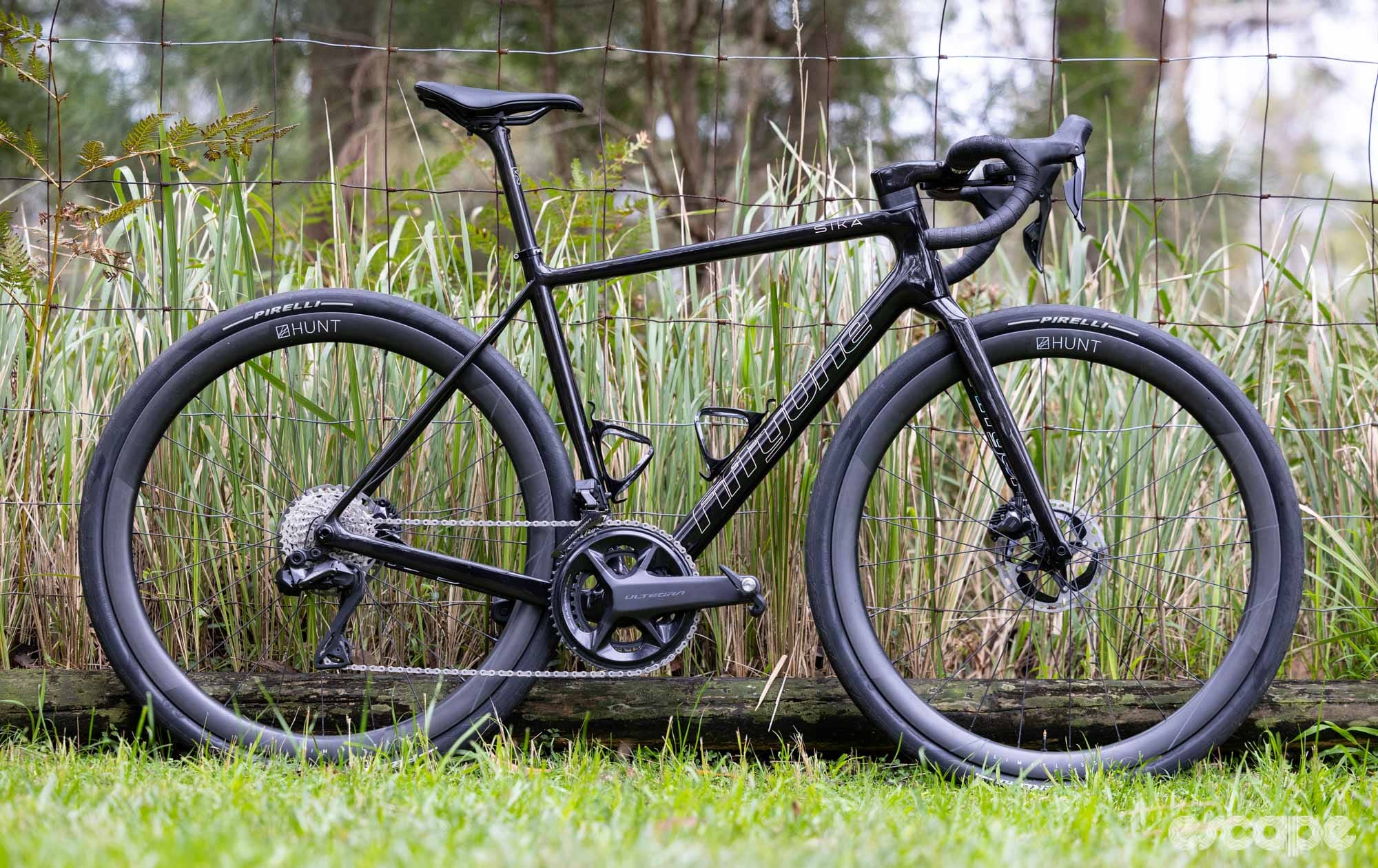
Other modern flourishes include a T47 internal threaded bottom bracket and a UDH for compatibility with the latest Full Mount derailleur. Notably, it’s also fitted out like a race bike, with no provision for fenders, no mounts on the top tube, and no way to store your prized possessions within the down tube. The recommended maximum chainring size is 53T, while the 52/36T I tested has oodles of room.
The Sika is a road bike, and it even feels suitable for racing, but it’s important to note that it lacks UCI approval. That little rainbow frame sticker you find on many road bikes is gained through a brand submitting and paying for its frame to be approved by the sport's governing body – a not-insignificant expense that FiftyOne feels is of little benefit to the likely buyer of this bike. This shouldn’t be an issue for lining up at your local club race or gran fondo, but it's worth considering if you have ambitions of entering events that may have UCI commissaires present. That said, the frame passes international standards testing (ISO 4210) and is backed by a lifetime warranty.
FiftyOne makes some big claims around the Sika frame being a feathery 690 grams (no paint, no hardware). While its still well-weighted, my clear-coated medium-sized sample tipped the scales at an actual 838 g when including the UDH derailleur hanger, bolt-on front derailleur tab, and bidon cage bolts. Meanwhile, Matt LaPrade, owner of AE Service Course in Folsom California confirmed a small-size frame weighed 849 g. That's not particularly heavy, but they’re a far cry from what the claimed figure may have you believe.
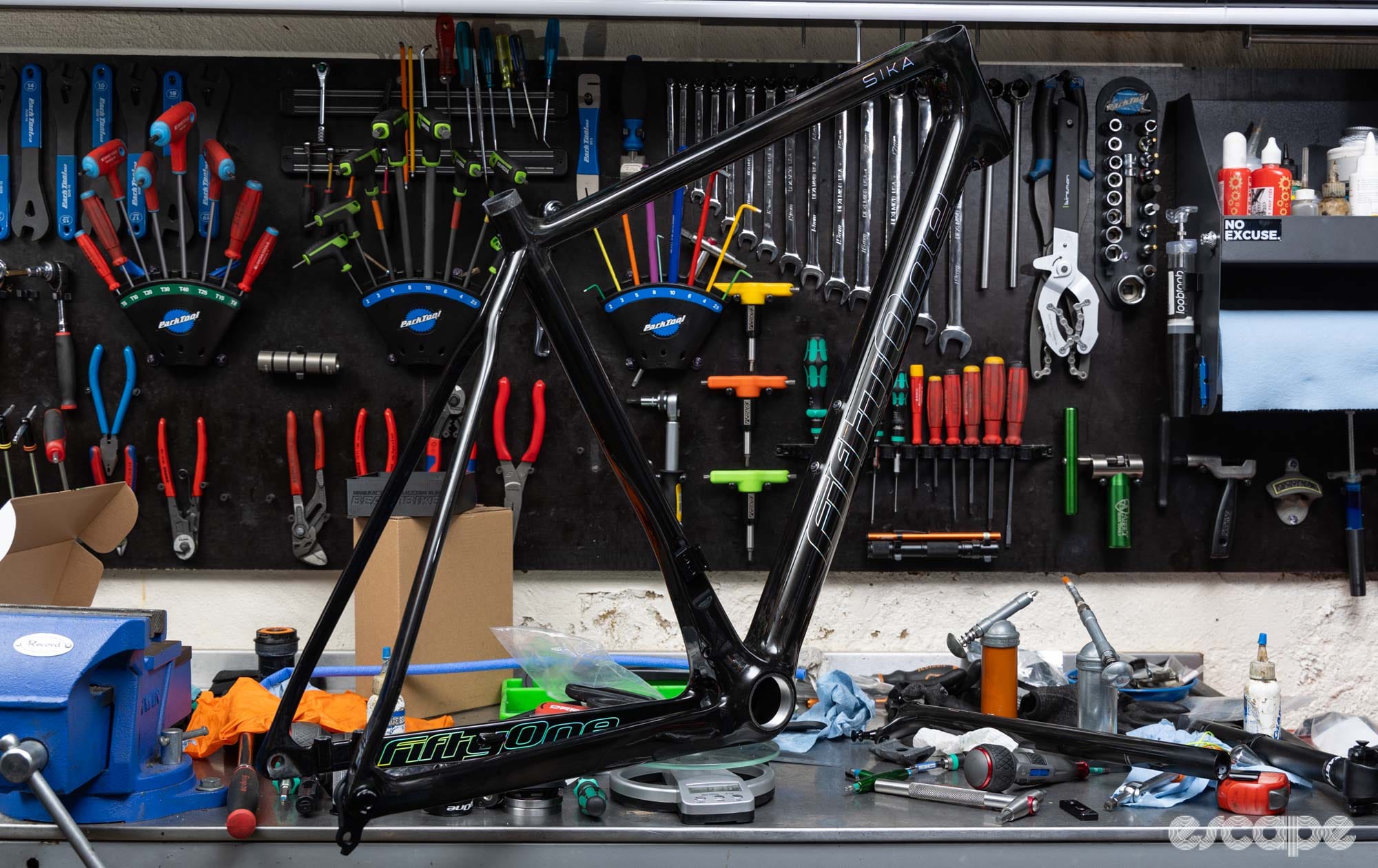
Other actual weights include 368 g for an uncut fork (no axle), 148 g for the 380 mm-length seatpost, and 348 g for the one-piece handlebar/stem in a 38 cm width / 100 mm stem length. Add a further 168 g for the thru-axles, headset, seat clamp, and steerer compression plug. All told, a complete bike around the 7 kg mark is within easy reach with top-tier components, while my finished Ultegra Di2 and Ultegra C36 build weighed 7.26 kg without pedals or cages.
As tested, FiftyOne offers the Sika as a frameset (US$4,500 / €4,500 / £3,900 / AU$7,300) which includes the company’s own one-piece bar/stem and matching seatpost. In case you don’t want the seatpost, the company will reduce the frameset price by US$290 / €250.
Complete builds start from US$7,500 / €7,500 / £6,250 / AU$TBC with Shimano Ultegra Di2 and matching wheels (effectively how I tested it). FiftyOne also offers complete bike options with SRAM Force AXS, SRAM Red AXS, or Shimano Dura-Ace Di2, and with a choice of Shimano Ultegra, Zipp 303S, Zipp 303 Firecrest, Enve Foundation, or Enve 3.4 wheels.
In the USA, the pricing currently excludes tariffs and duties. “We communicate regularly with our dealer base there and it would seem this is their current preference,” explained FiftyOne’s founder Aidan Duff. "We did what we could to get as much product into the US before tariffs kicked in so the likelihood is that consumers can still snag pre-tariff pricing.
"The sad reality is with the decline of the USD against all major currencies, and the tariffs, the US will now be the most expensive place to purchase any brand of bike. Whilst we have remained at our original September 2024 launch pricing, the likelihood is this will be revised (upwards) in coming months."
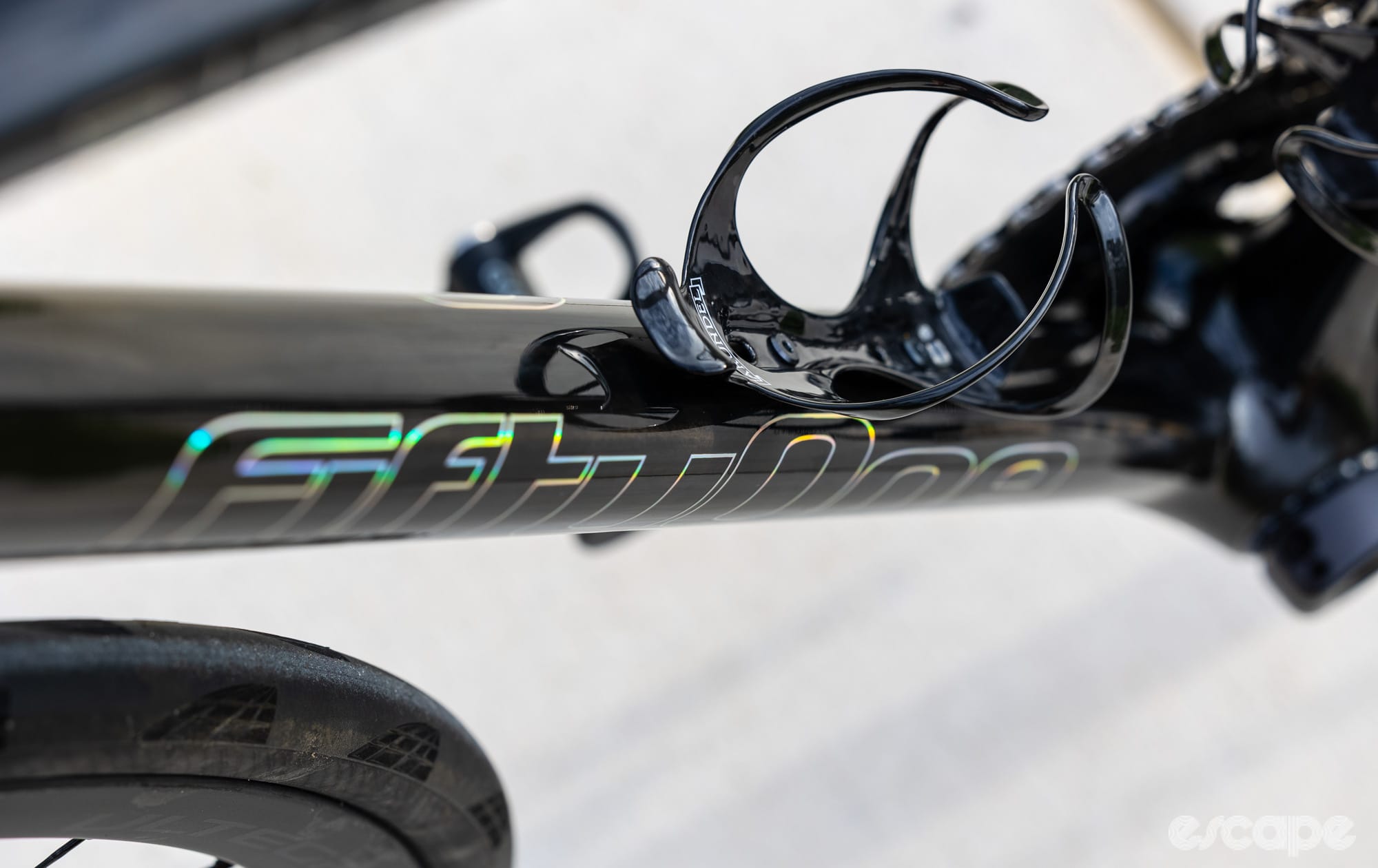
FiftyOne started with the tested “Black Ops” raw clear-coated frame with colour-shift graphics, and an equally classy white option is coming into stock any day now. Both finishes are designed by Ron Jones who formerly headed up road design at Specialized (during the Peter Sagan era of special-edition bikes).

Like what you're reading? You'll have to be a member to read all of it. Escape Collective is 100% membership-funded, with no advertising and no affiliate links in our product reviews. Our work is only possible through your support. Need another reason to join? Our Member Purchase program offers discounts of 20% or more from participating brands like Velocio, Ritchey, Hunt Wheels, Silca, and more (we get no revenue from your purchases; this is purely a member benefit).
A middle ground approach to fit
The big story with the Sika is its geometry and fit dimensions. Here, it offers some racey handling characterstics combined with marginally relaxed fit dimensions closely comparable to bikes like the Cervelo Caledonia and Giant Defy Advanced. Or in other words, if you typically ride a race bike with a spacer or three beneath the stem (most people do), then the fit on this should prove excellent.
While you’ll find some variance depending on the size being compared, the Sika’s stack and reach figures are only marginally relaxed compared to a number of popular race bikes, but it’s enough to be a positive from my point of view. Adding to the stack height, FiftyOne allows for up to 40 mm of stem spacers beneath the stem (and round spacers, with a minor bit of filing, can be fitted above the stem while figuring out the fit).
| Bike | Size | Stack (mm) | Reach (mm) |
|---|---|---|---|
| Canyon Ultimate CF SL | Small | 539 | 390 |
| Bridge Bike Works Surveyor | 53 cm | 539 | 383 |
| Trek Emonda SLR | 54 cm | 541 | 386 |
| Specialized Tarmac SL8 | 54 cm | 544 | 384 |
| Giant TCR Advanced | Medium | 545 | 388 |
| Cervelo R5 | 54 cm | 547 | 380 |
| BMC Teammachine SLR01 | 54 cm | 550 | 386 |
| Enve Melee | 54 cm | 552 | 386 |
| Cannondale SuperSix Evo | 54 cm | 555 | 384 |
| FiftyOne Sika | Medium | 555 | 380 |
| Cervelo Caledonia | 54 cm | 555 | 378 |
| Giant Defy Advanced | Medium | 558 | 380 |
| BMC Roadmachine | 54 cm | 562 | 386 |
| Factor LS | 54 cm | 566 | 383 |
| Enve Fray | 54 cm | 573 | 383 |
While the fit on this is right where I believe most consumer-facing performance bikes should be, it’s worth noting that it may still prove too aggressive for those that need a true endurance fit. Bikes like the Specialized Roubaix, Trek Domane, Cannondale Synapse, or Enve Fray can still be set up to be more upright in the front, and so speak with a shop or bike fitter if you’re used to having your bars near equal in height to the saddle.
Each of the six available sizes come with a prescribed cockpit size, but the company is happy to change it at the time of ordering. FiftyOne produces this matching one-piece bar in stem lengths of 80-120 mm (fixed -9.5° angle), with bar widths ranging from 38 to 44 cm. Surprisingly, all combinations are available.
The handlebars are measured center-to-centre at the hoods, with a comfortable flare that adds 40 mm of width at the drops. Regardless of chosen size, the bars feature 75 mm of reach and a 125 mm drop. Despite there being some 20 size combinations of handlebar, FiftyOne offers its matching 27.2 mm seatpost in a single 15 mm offset. At least on the tested gloss clear-coated frame, FiftyOne’s own seatpost is a stunning match and so I wish the brand would offer a matching straight version – a bike of this level deserves that.
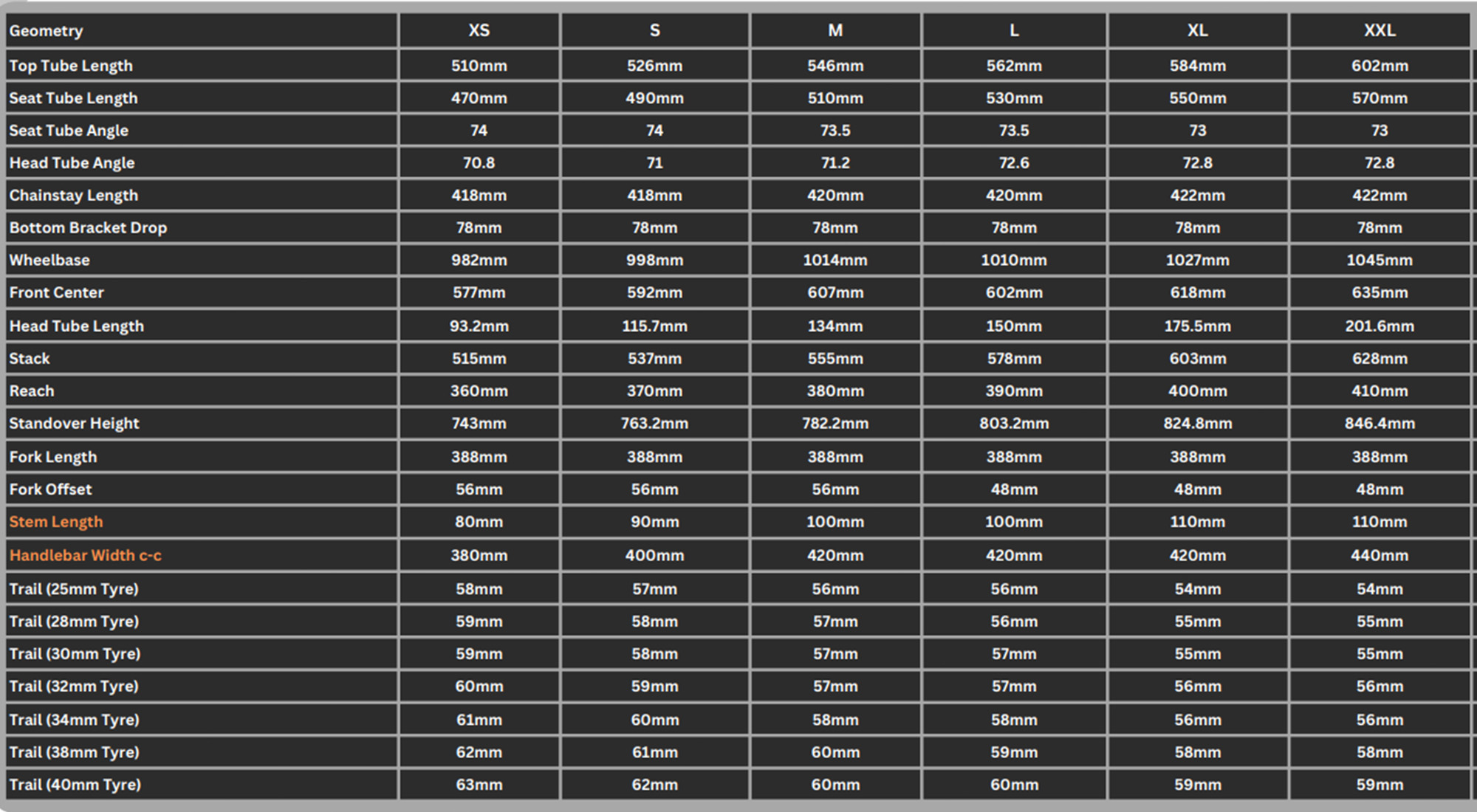
On the handling side, the Sika blends a marginally longer wheelbase, a low bottom bracket, and a fast trail figure. In many ways these numbers are well suited to trends in using bigger road tyres and shorter crank lengths. Also, kudos to the company for providing trail figures across a range of compatible tyres.
Speaking of trail figures, FiftyOne has made the investment in two different fork offsets, with the smaller three sizes featuring a surprisingly big 56 mm number that retains the quick trail figures despite the marginally slacker head tube angles. Meanwhile, the biggest three sizes feature more traditional road head angles and a 48 mm offset fork.
Also less common in road bikes are the scaling rear-centre lengths, with three lengths featuring across the sizes. This is a common trend in mountain bikes where the rear-centre lengths grow with the front-centre lengths in order to better maintain weight distribution.
Quality build
Having started this test with a frameset I was well positioned to get a sense of the build quality, and here, the Sika really shines. All mounting surfaces were even, well finished, and protected from paint (or clear-coat) overspray.
Did we do a good job with this story?