
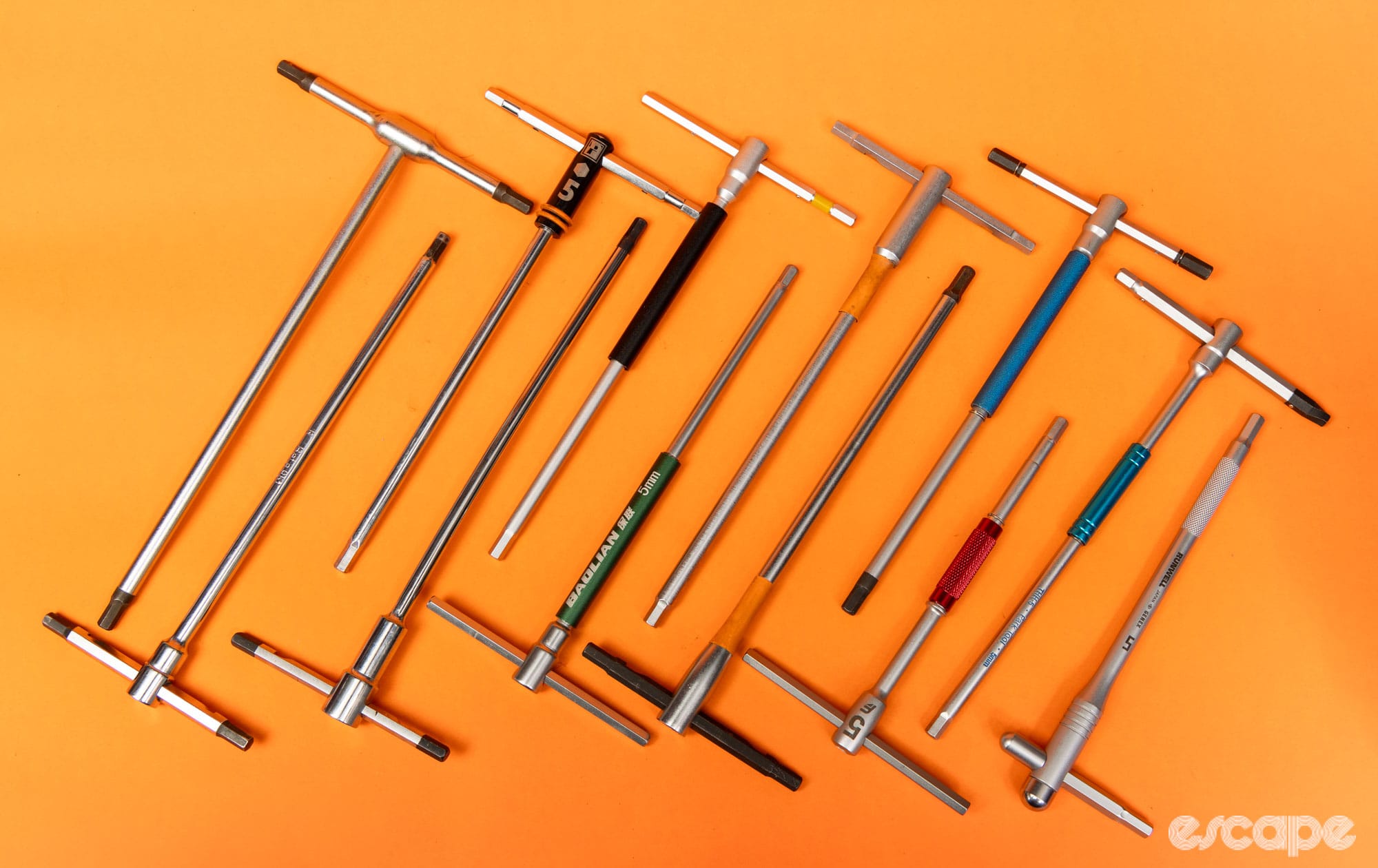


Popularised by motorbike mechanics and then adopted by mountain bike race mechanics, sliding T-handles have surged in popularity and number over the past few years.
I bought my first sliding T-handle hex keys a little over a decade ago after having seen them in use at mountain bike World Cups. There were only two options back then, and both were from Italian automotive tool brands: USAG and Beta. Fast forward to today and there are now countless options, including from numerous cycling brands.
With so many to choose from, and many looking the same, I set out to find the best sliding T-handle hex keys. I spent a reckless amount of my own money and fondled, measured, torqued, and twisted all of them over an extended period time, all while taking feedback from other mechanics. There’s a lot of detail below, but given what some of these tools cost, that detail is worthwhile. And yes, there is a clear winner.
Perhaps the biggest takeaway is that despite being an early mover on these, and having used over a dozen options over the past decade (including a few that are now discontinued), I still don’t consider this style of hex key to be a must-have for bicycle mechanics. In fact, I’d be quite happy without them. Still, they’re now a popular option, and for that reason, this article exists.
Table of contents:
- T-handle types explained
- The good and bad of sliding T-handles
- Things to consider
- 10 sliding T-handle sets tested (plus two more)
- A chart of numbers
- The winner
What are sliding T-handle hex keys?
As covered in the first edition of Threaded, hex keys come in many formats, and it’s often a matter of personal preference which is best. When working on bicycles, it’s common for experienced mechanics to use multiple shapes and forms of hex keys in order to work efficiently and avoid damaging (rounding) fasteners. One tool that's commonly picked by many is the T-handle.
T-handles get their name, as you'd expect, from the tool's T shape. There are three common types of T-handle hex keys, and while this article largely focuses on the specialty sliding type, there are some important distinctions to make.
A traditional T-handle hex key is a fixed tool, often with a large rubber-coated handle and a single hex key interface at the end of the long blade. These are extremely popular among motorcycle mechanics and machinists as the tool allows access to deeply-set fasteners that are in a position where a normal L-shaped key can’t complete a full revolution. The large handles aren’t just designed for comfort, but also act as a counterweight for quick spinning of the tool. Meanwhile, the shafts are often designed to twist at an appropriate torque to the fastener size being turned.
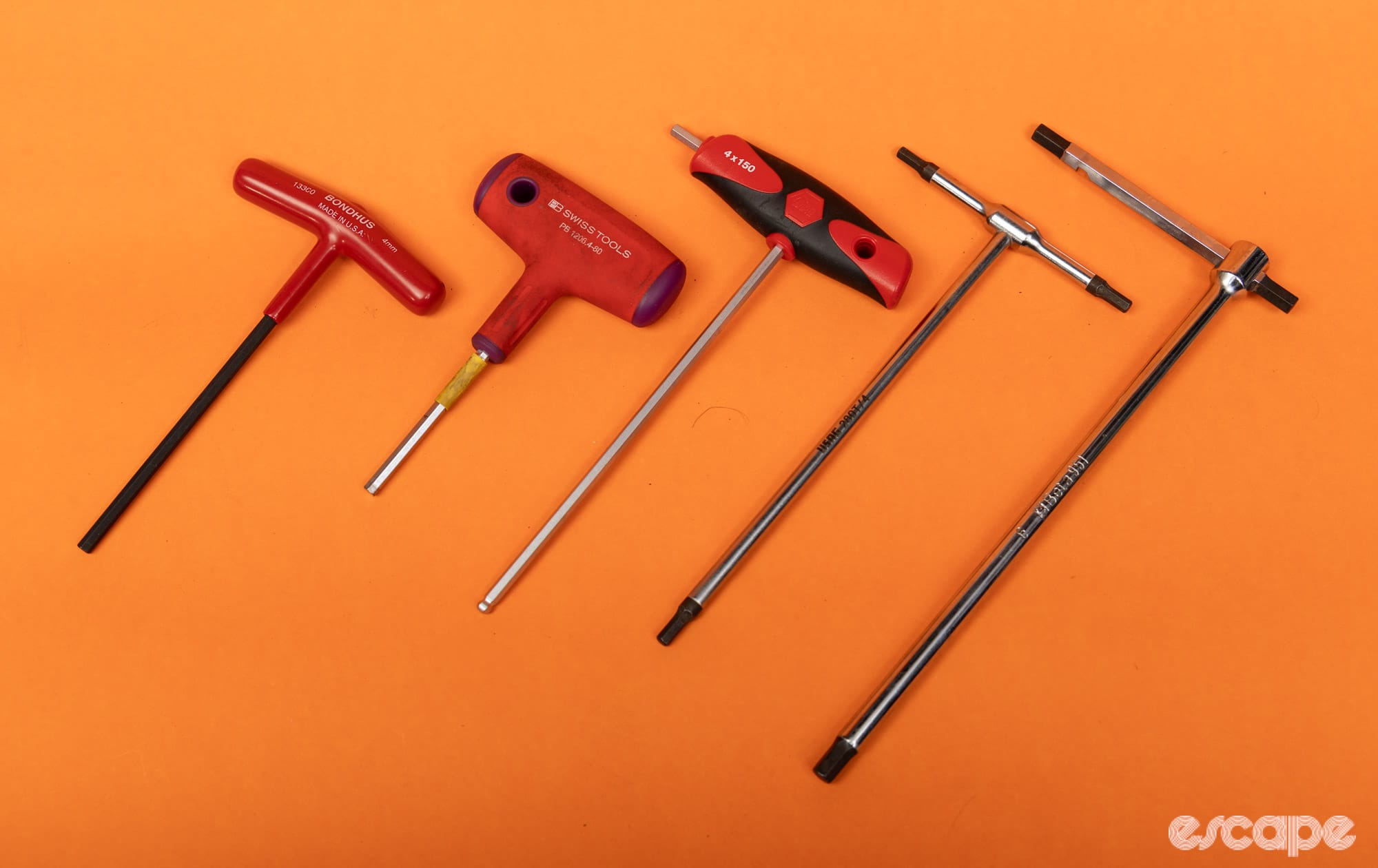
On bicycles, those traditional fixed T-handle hex keys can be excellent for straight-access fasteners like on a stem, but most situations call for working in tighter confines and perhaps more leverage. This is the idea behind the sliding T-handle. A sliding T-handle keeps the T-shape, but the fixed handle is replaced with a bar that can slide through the tool, allowing you to turn that T-handle into one that more closely mimics an L-shaped hex tool – aka, the classic Allen wrench. Most sliding T-handles feature three hex ends of equal size. Some options replace one of the ends on the T-bar (aka, the short side) with a screw-removal feature or smooth edge that’s less pointed.
Lastly, there’s the two-sided T-handle variant where the short end has an ergonomic handle around it. These are commonly called a T-handle, but I’d argue they’re technically a P-handle. This article focuses on the sliding T-handle variant, but if there’s demand, I’ll look to review P-handles in future.
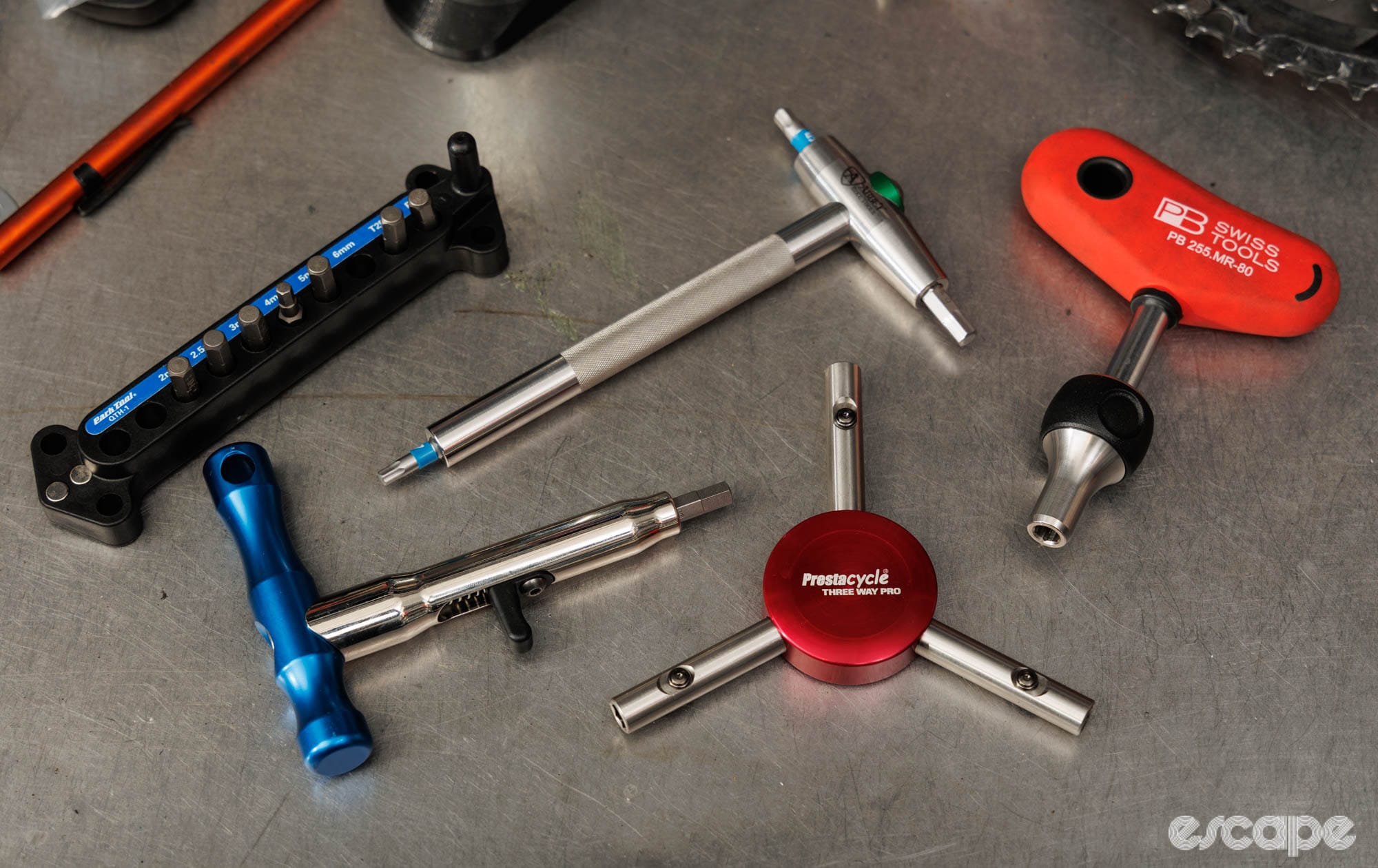
This article focuses on metric-sized hex tools, but most of the covered products are also available in Torx and SAE variants.
At Escape Collective we’re wholly member-funded with no affiliate links, sponsored content, or brand input swaying what we share or cover. If you’re seeing this, you’ll soon hit a paywall.
This deep dive on a specific type of hex key is the perfect example of what being a member-funded publication allows. Yes, this is a niche subject, one that ad-driven or click-based publications couldn’t justify doing on this level.
An annual membership costs far less than the wrong choice of hex key set, plus, it’ll give you access to all 45 editions of Threaded. Oh, and you’ll get everything else that Escape Collective has to offer. Independent. Ad-free. Member funded.
The good and bad of sliding T-handle hex keys
Sliding T-handles aim to be the holy grail of hex keys. You get a balanced tool that’s easy to spin between your fingers for quickly running through a thread. The sliding T aims to improve access when clearance is inhibited or where increased reach is needed. There’s the option for plenty of leverage when something is tight or needs to be. And it’s a tool you can push into, allowing a proven technique for when a fastener head feels like it’s about to round out.
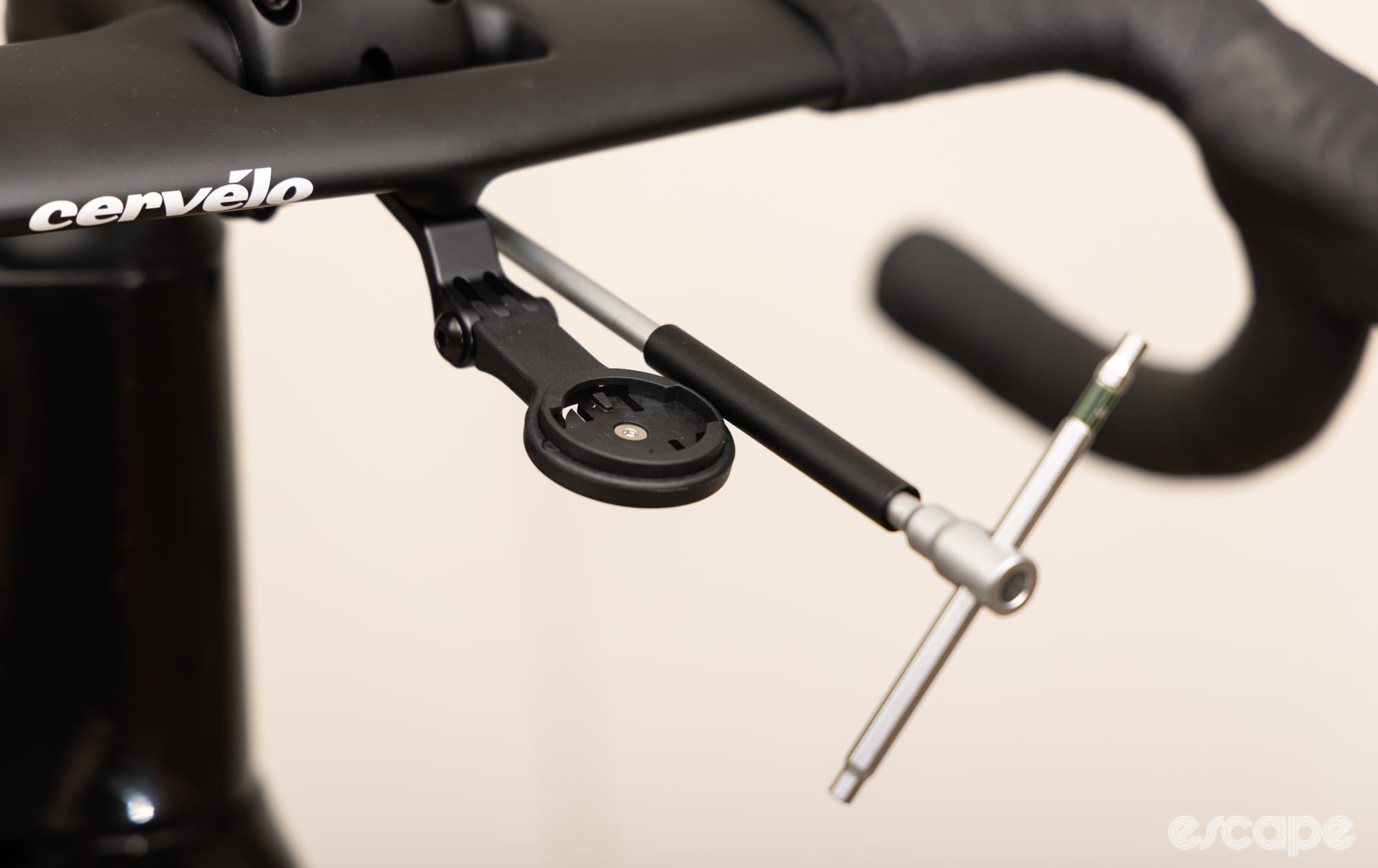
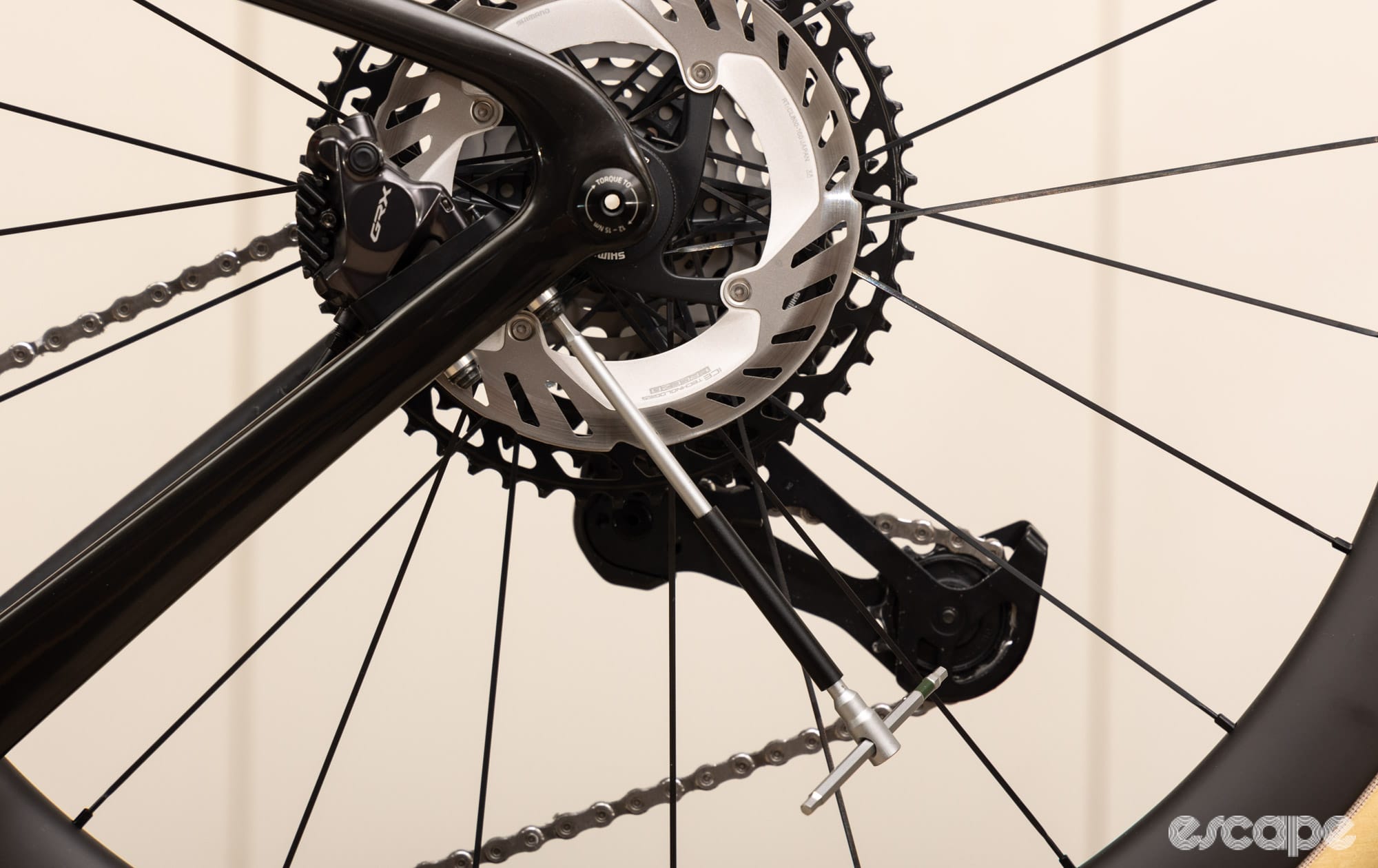
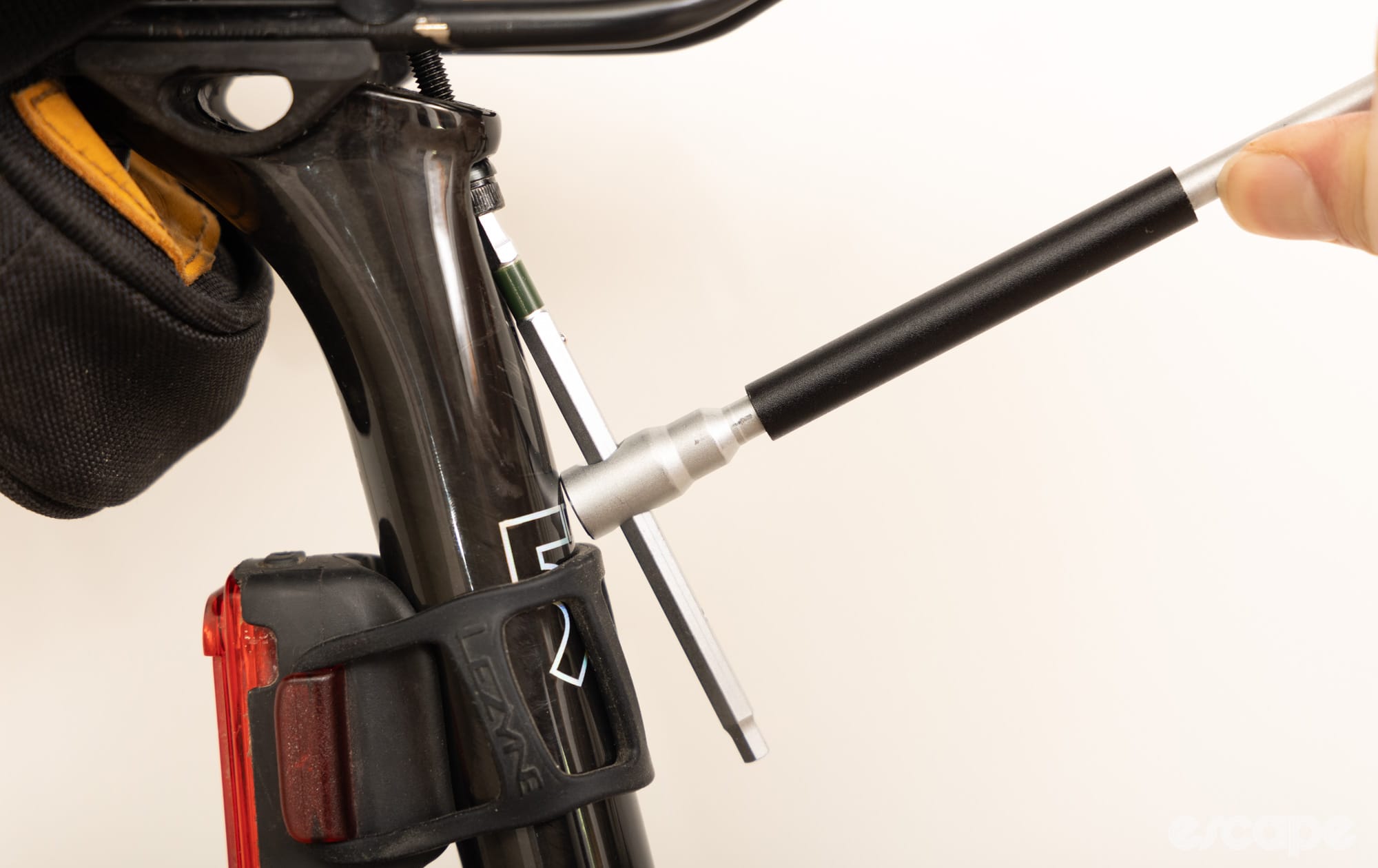
T-handles are great at giving you straight access to areas that would typically not allow a full revolution of a more traditional hex key.
While a lot of the above is true, sliding T-handles aren’t perfect. I find the smaller sliding T-bar to ignore ergonomic principles, and so it can feel poky in the hand. Modern bikes can have fasteners tucked tightly against the frame or components, and so the bulbous shaping of these sliding tools (at the T-junction) won’t always fit.
And while there’s plenty of leverage on offer, experience shows that these multi-piece tools can introduce more weak points than traditional hex keys, and so breakages can occur if the tool is misused with a cheater pipe or extreme strength. Add in that they're typically the most expensive form of hex key, and they're certainly more a luxury than a must-have.
Things to consider
Tolerances, durability, and finish
One reason to spend more on commonly used tools, such as hex keys, is that the better stuff tends to last longer and offer more precise sizing. Better sizing means fewer rounded or damaged fasteners, which is a big time- and money-saver for anyone turning a wrench. Additionally, that better sizing also results in reduced tool wear, so your investment goes further.
Tools can be undersized or oversized. International standards call for tools that measure right below the edge of the nominal quoted number, but don't go over it (e.g. a 5 mm hex key should measure up to 4.99 mm). Still, it’s not uncommon to come across a bolt head that’s undersized, where a tool that’s well toleranced, but not excessively so, is the right answer. I’m a strong believer in the saying ‘Buy once, cry once’, and it certainly applies to commonly used hex tools. The surprising fact here is that in the world of sliding T-handles, even the cheapest options seem to be sized well, or at least, well enough.
No ball-ends
A common theme across all the sliding T-handles is the lack of a ball-end. Ball-ends are commonly found on hex keys as they help to gain you access at awkward angles. However, ball-ends are not designed, nor recommended, for use at final torque (or loosening), and a straight hex is a superior option if the angle of approach allows it. A sliding T-handle hex key aims to provide a tool that gives you that straight angle and secure fit more often.
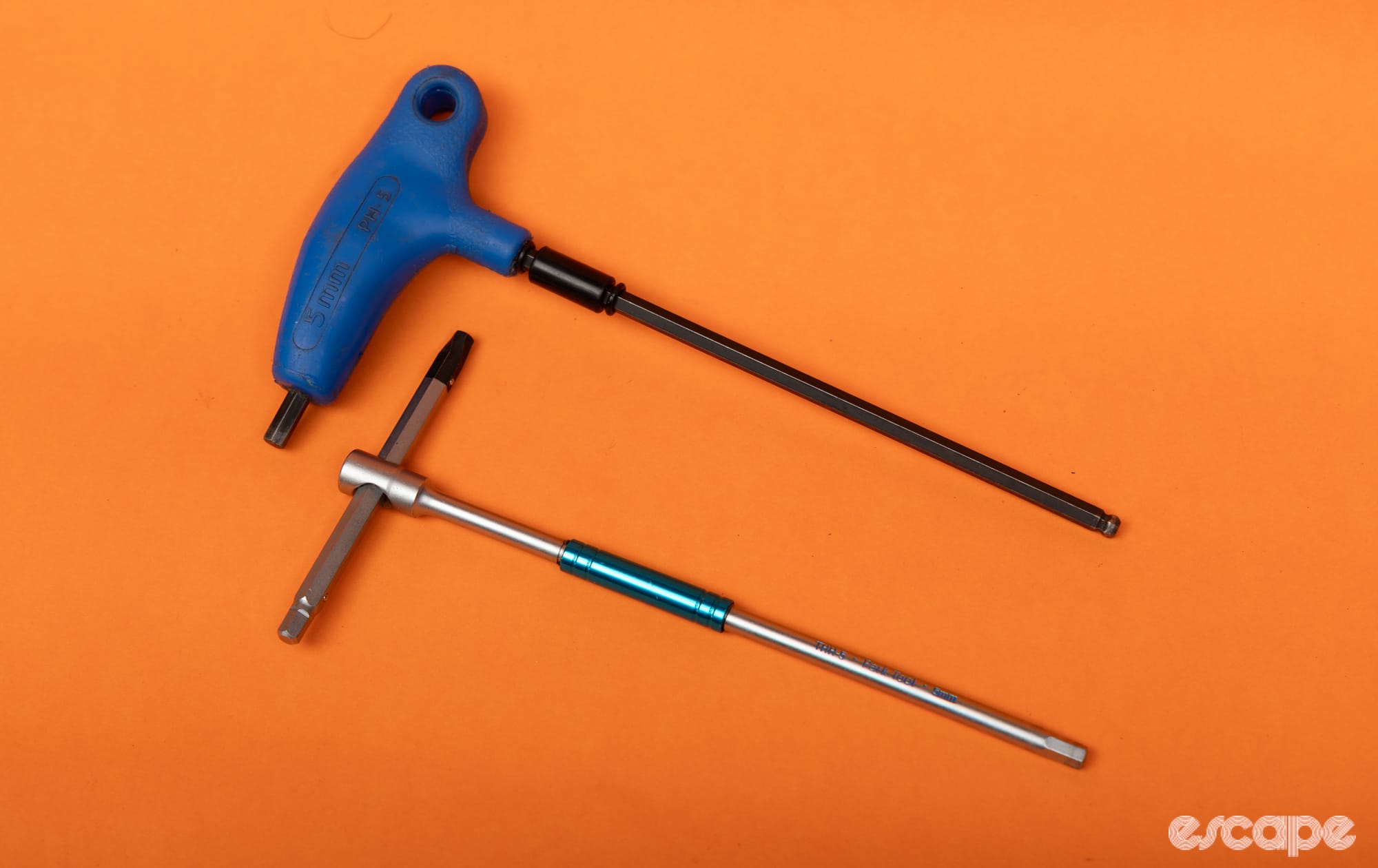
Rarely straight fluted
You’ll find that sliding T-handles don’t feature a consistent extruded shape that matches the hex size. Instead, you’ll notice a round shape that tapers or cuts down to the hex at the end. In addition to making it easier to spin between your fingertips, this shaping gives the tool more strength and stiffness.
The downside, however, is that access to concealed or countersunk bolts can be inhibited – something you may come across on certain rear derailleur mounting bolts, headset top caps, derailleur limit screws, and some seatposts. On larger sizes this can even inhibit use on certain crank bolts or pedals. It’s yet another reason why it’s never a good idea to own a single type of hex key.
Spinner sleeves or not
A key benefit to sliding T-handles is the ability to spin them while running down a thread. You’ll find differing theories when shopping in this category, with some tools offering a solid surface to grab and turn the tool from, while others provide a spinning sleeve to hold onto while turning the tool. My preference firmly sits with the keys that offer a solid surface to spin the tool from – something that can be done one-handed.
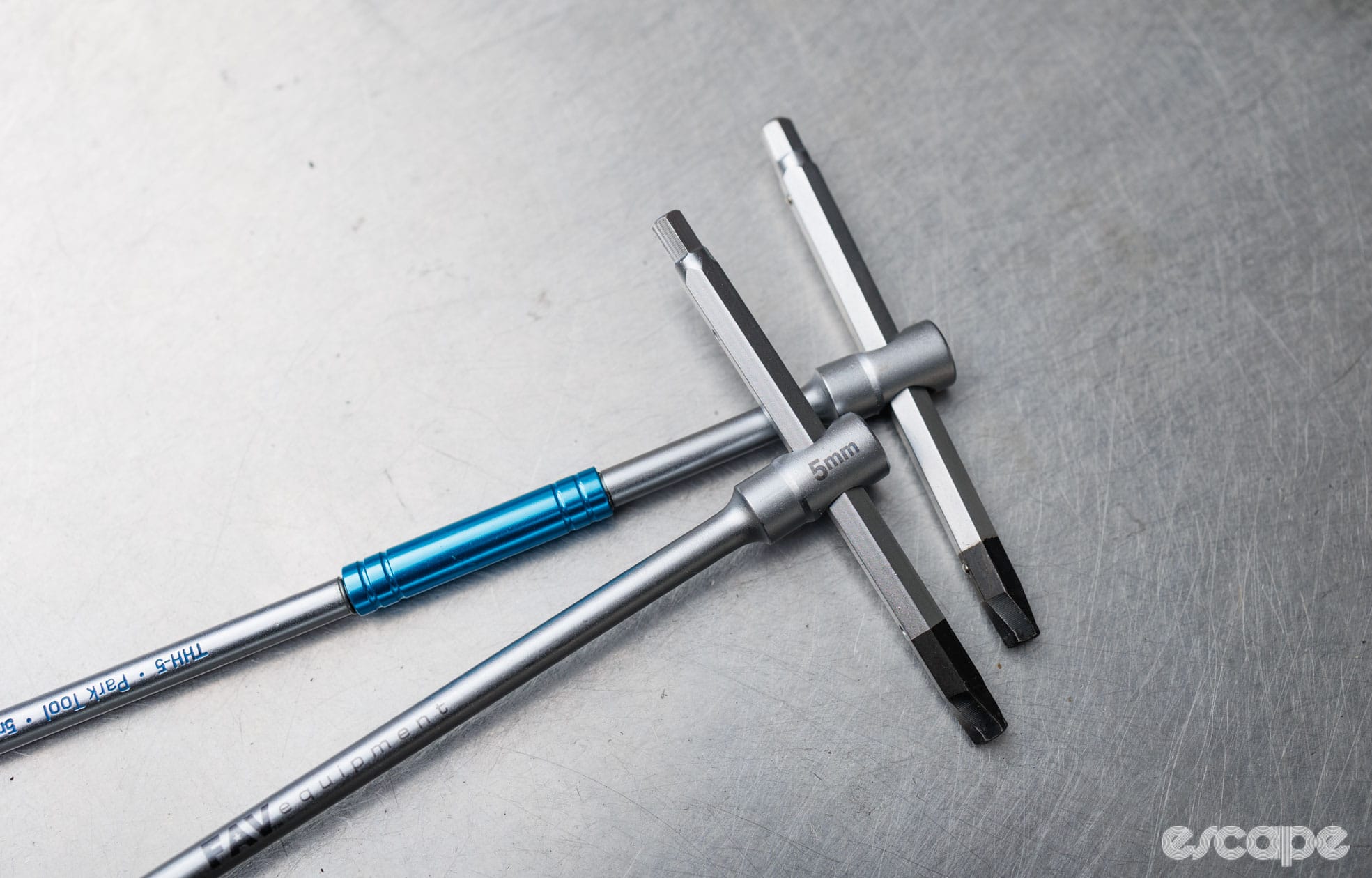
By contrast, many of the more generic tools in the category give spinner sleeves. My experience has been that these sleeves are often a gimmick – they’re the first part to fail, and the accompanying grooves cut into the tools can act as a sheer/weak point. I also find these spinner sleeves block my fingers from being able to twirl the tool. Instead I'm stuck spinning it from above with a second hand.
The surface finish also plays into this discussion as some of the chromed tools can be quite slick with oily hands. For this reason I wish knurling was more common (knurling being a grippy texture that’s rolled into the tool surface).
Sliding mechanisms
A sliding T-handle is only as good as its sliding function. Most brands have settled on a similar design where a detent ball locks the handle into one of three positions.
Sliding mechanisms explained.
As you may imagine, how easily that handle slides can greatly impact the ease of use. Some can slide a little too easily, moving when you don’t expect them to and in some cases, even coming apart and inspiring a fit of rage. Others can be almost too tight. The goldilocks option is one that stays where it should when it should, but is smooth to move when wanted.
You may also want to consider the length of the sliding T-bar. Shorter lengths can be better when clearance is limited, while longer lengths are typically more comfortable in the hand and will better reach into deeper-set fasteners.
Not the strongest tool type
I’ve hinted at it a few times, but the modular nature and multi-piece construction of these tools mean that they’re not one I recommend using when a bolt is truly stuck. These will be perfectly strong for general wrenching, but grab a breaker bar or a more conventional one-piece hex key if you’re about to bust out that forehead vein.
Related to this, I’ve received numerous reports of breakages for most of the cycling-branded (and generic branded) sliding T-handle tools covered here. One source explained that while design can be a factor, it’s largely related to how the tools are heat-treated in batches which can cause variable results.
Size identification
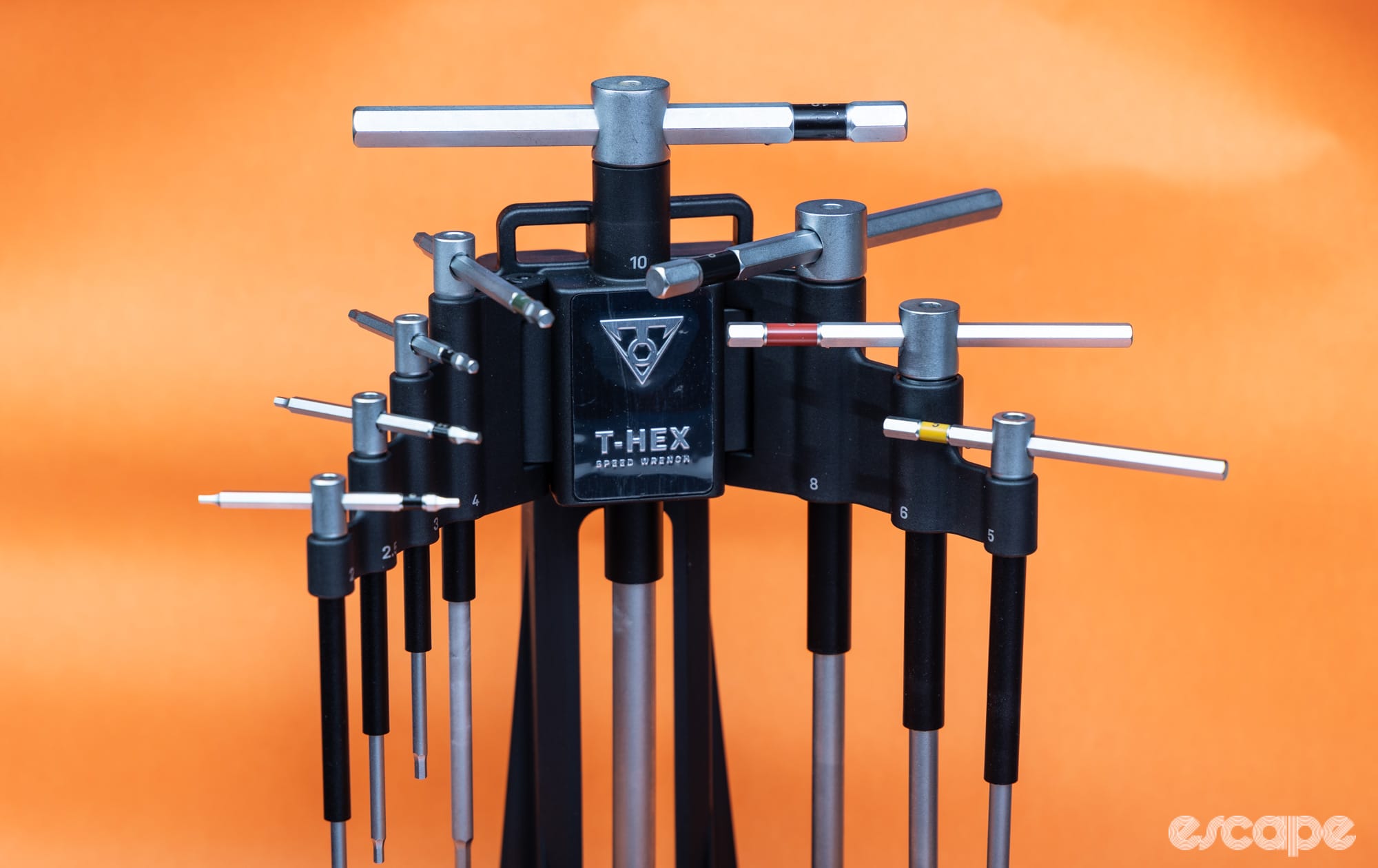
A common theme with many sliding T-handles is that they lack clear size markings. The bigger issue is that, due to the tool design and often machined-in hex ends, it can be difficult to sight the sizing, such as between the small 2.5 and 3 mm sizes.
The likes of Pedro’s and Topeak solve this with welcome colour identification; for the rest I’d recommend considering adding your own markings. I use pieces of coloured heat shrink to help me quickly find commonly used 4, 5 and 6 mm sizes. Paint pens work too.
Sets and individual sizes
One benefit to buying quality tools is that you often have access to replacement parts or spares. This certainly applies to better hex tools where you can purchase single sizes. This can be hugely helpful if you were to misplace that 4 or 5 mm or wear it out.
Another benefit is that you can buy just the sizes you need. While some people like a full size range in this tool type, I personally tend to only use them in sizes of 4 mm and up. They’re especially awesome for adjusting disc brake calipers (4 and 5 mm hex).
Cases and holders
If you’re looking at a complete set, you may also be buying into a matching case or holder. Some of the cases and organisers are awesome; others not so much. I’ll cover these in the review section.
It’s worth noting that some of the better benchtop or wall-storage options can be bought separately, so if your set comes with nothing (such as my pick of the bunch), then there are options for keeping them organised.
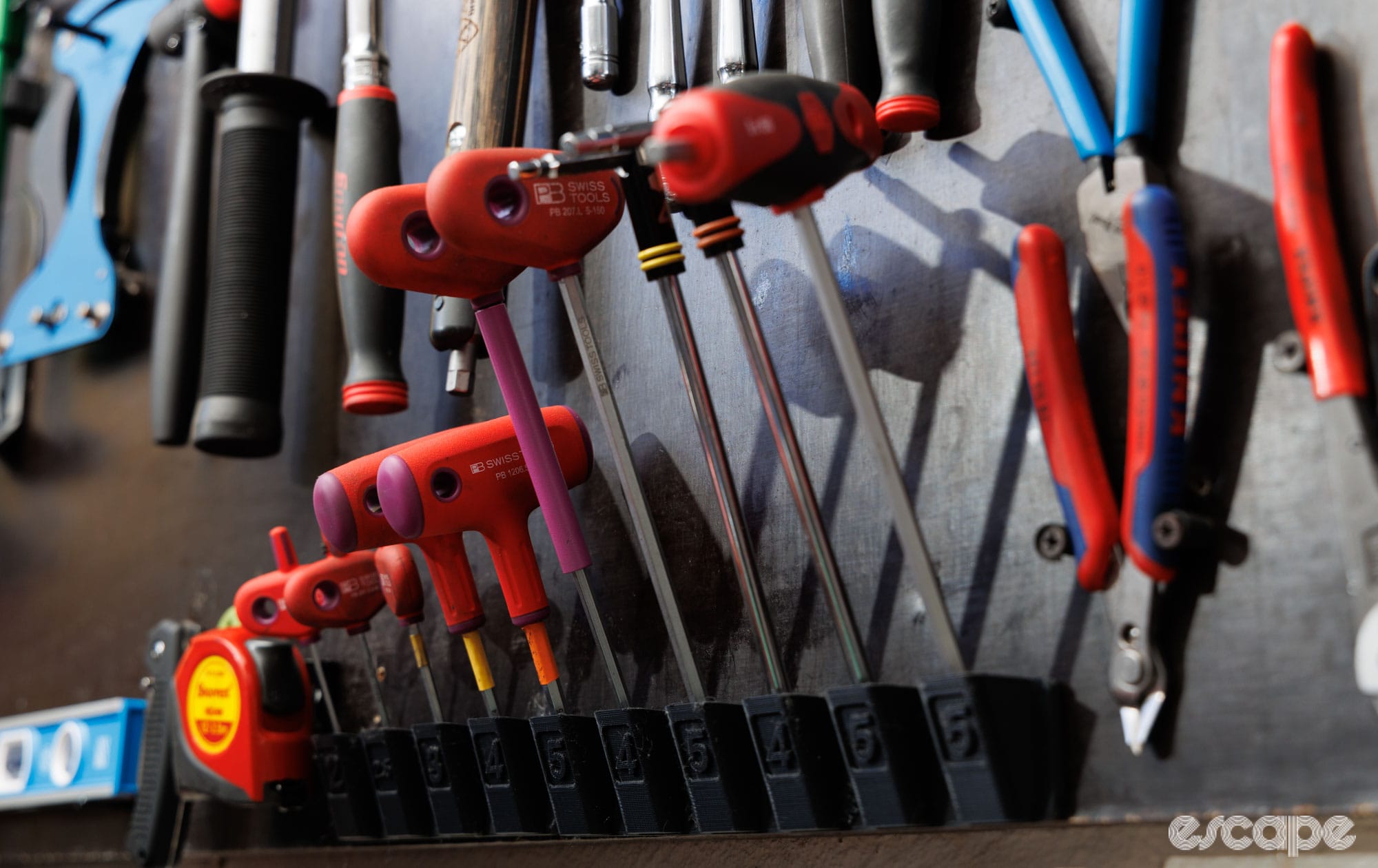
If you’re wanting to store your sliding T-handles upright up on a bench, know that USAG makes a great dangling option. And if you want them on a wall, then the Park Tool THH-H holder is my pick of the bunch.
Same same but different
Yes, many (but not all!) sliding T-handles likely come out of the same couple of Taiwanese or Chinese tool factories. However, that doesn’t mean the tools are the same.
It’s often up to a brand to specify the features, finish, tolerances, and quality control level they desire. Put simply, better features and tighter tolerances demand higher manufacturing costs. It’s also not unheard of for the products that fail one brand’s quality control requirements to then be sold under another brand – it’s like a lucky-draw when you start seeking the cheapest options.
This isn’t to say that spending more will always result in a better product; that’s not always the case. Rather, it’s worth considering that just because one thing looks like another, doesn’t always mean it’s exactly the same.
Warranty
This style of hex tool can be quite expensive. In addition to considering whether individual sizes are available, I’d also consider the warranty that is offered. My experience is that many bigger-name brands offer a lifetime warranty and will quickly send out replacements when things go wrong. You may struggle to even contact the brands behind the cheaper sets.
10 sliding T-handle hex tool sets tested (plus two others)
Beta 951
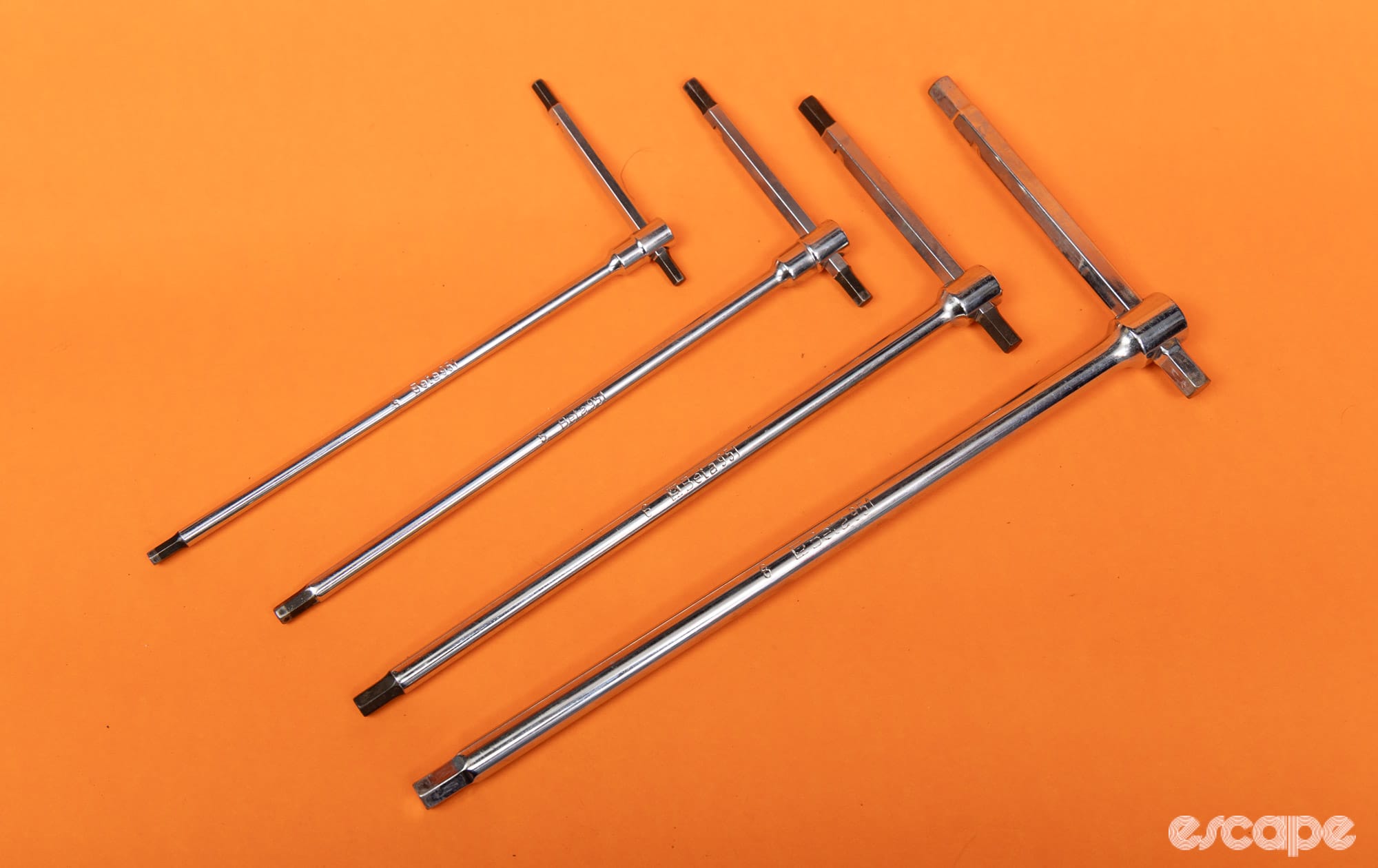
The OG of the sliding T-handle game. I wrote about these Betas back in 2014, and at the time, suggested they may just be the best hex keys in the world. Today I wouldn’t repeat such a claim of these now widely copied tools, but they continue to be one of the options to beat.
Many sizes feature burnished ends which offer good durability. The chrome finish is lovely, but it becomes slick with oily fingers. Also note the sliding feature on these have no central detent stop point – some people love this, others don't. I’ve heard conflicting stories about the place of manufacture, but a few cite Italy.
Sizes available: 2 - 14 mm (individually or as sets)
Torx option: Yes
Storage stand: Optional
Price: From US$21 each, sets from US$178
More info: Beta
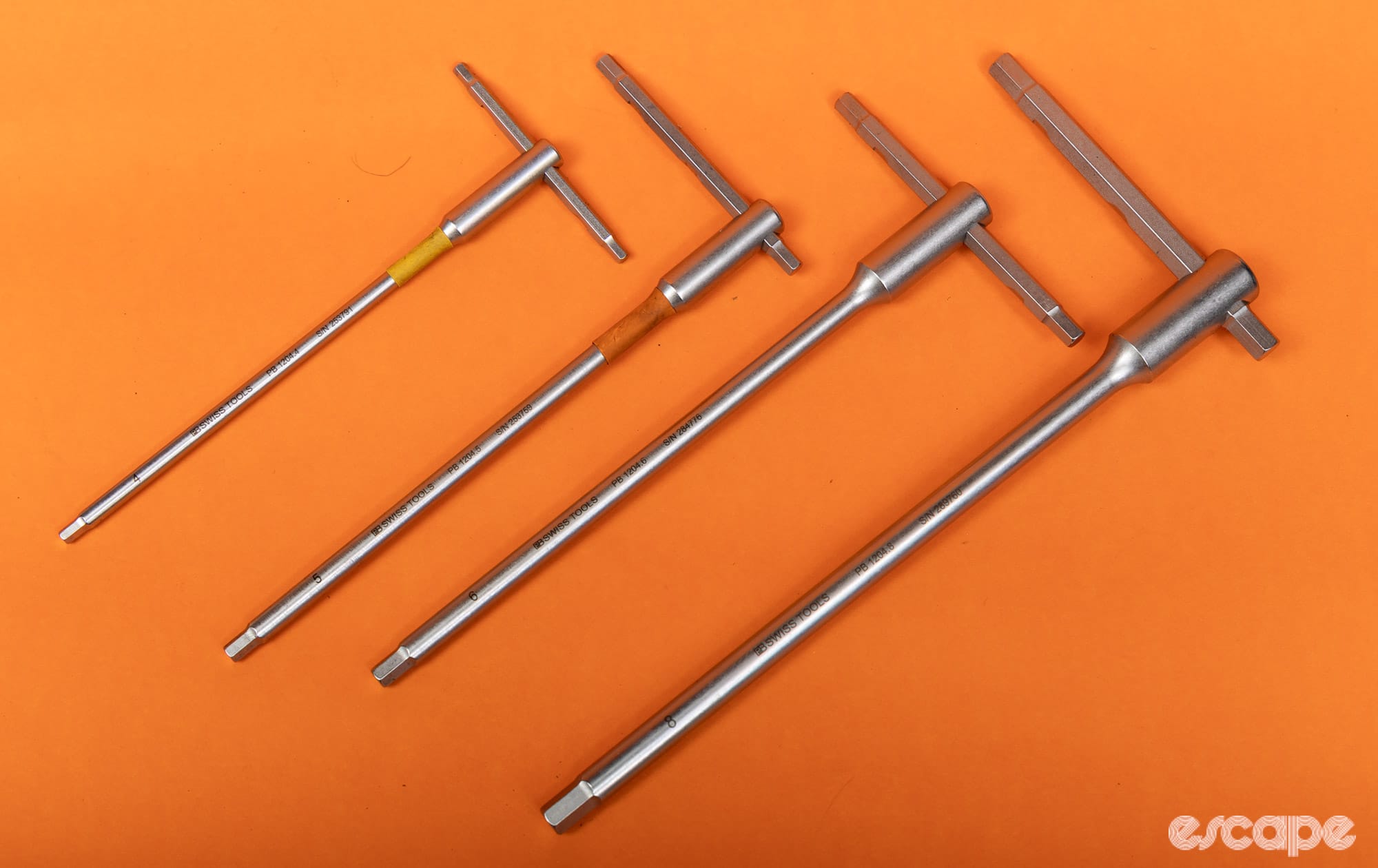
PB Swiss PB1204
Did we do a good job with this story?