

Big fashion brands have been battling copycat counterfeiters for decades. Yet in the world of bicycles, counterfeits have often snuck into the hands of unsuspecting consumers who just assume they’ve stumbled on a good deal for a part that, surely, nobody would bother to make a fake of.
Sadly, counterfeits are now rampant in cycling circles. It may have started with big-dollar items like Specialized S-Works and Pinarello Dogma frames, but today you’ll find fake copies of Rapha jerseys, Chris King headsets, Garbaruk cranksets, Ritchey handlebars, Park Tool tools, Thomson seatposts, POC helmets, and just about anything else with a desirable brand or where there's a dollar to be made.
I recently wrote an opinion piece explaining why I believe every part of a bicycle is safety-critical, and I’m increasingly concerned when I hear how easily one can unknowingly purchase counterfeit brake pads, Ultegra pedals, or even chains. Yes, chains.
The Global Cycling Network previously covered the topic of fake chains on YouTube, and that got me thinking: beyond different packaging and surface finishes, what are the functional differences? I reached out to Adam Kerin of Zero Friction Cycling for help with controlled durability and strength testing, and we were away. And the results are quite something, leaving Adam and I surprised by just how downright terrible and potentially dangerous these fakes are.
This testing may have focused on a specific model of popular chain, but I think the findings and lessons could and should be applied far more widely.
Purchasing
There were many directions this test could have gone, and quite simply, all the major chain manufacturers are battling against counterfeits. I’ve seen fake chains carrying the brand names of SRAM, KMC, YBN, and of course, Shimano.
Among those, it’s the counterfeiting of Shimano chains that appeared to be most rampant, and within that, the Dura-ace/XTR-level 11-speed HG-901 chain is one of the most purchased.
In Australia, authentic HG-901 chains sell for between AU$55 and AU$110 (approx US$36 to US$72). To ensure authenticity, I acquired the control chains direct from Shimano Australia (a subsidiary of Shimano Japan).
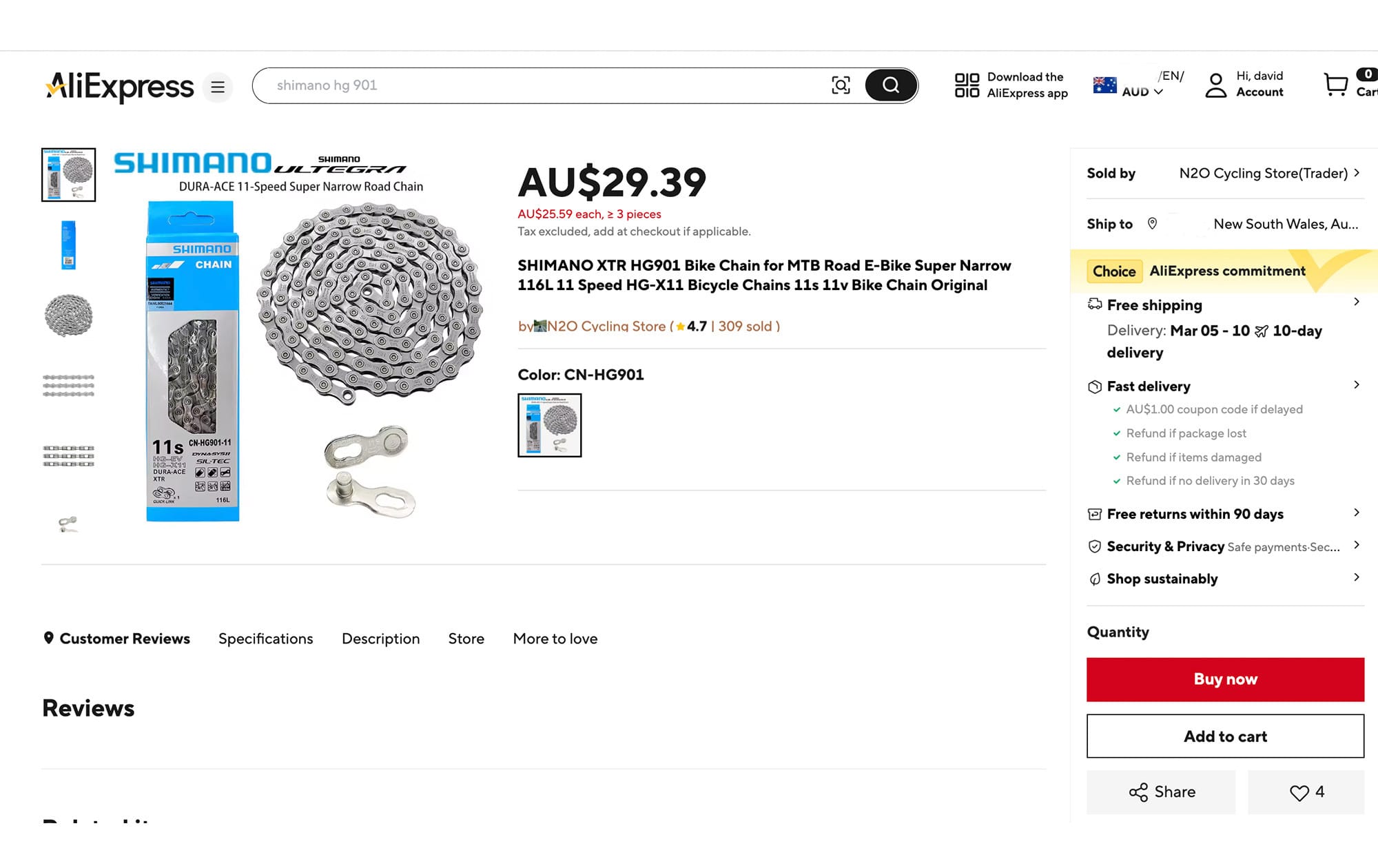
For the test, I didn’t want to just buy the blatantly fake chains that cost $10 on Temu; rather I sought chains that could be honestly mistaken as real. I bought one on eBay (store jw-sport-factory) for AU$62.69 (approx US$40). I bought the other counterfeit chain from AliExpress (store N2O Cvcling Store) for AU$30 (US$20) which claimed to be authentic, even showing a Shimano anti-counterfeit authenticity sticker in the photo. I also considered ordering one from Amazon, but they were import-only with long lead times and priced at nearly double the price of the real deal – odd.
Packaging
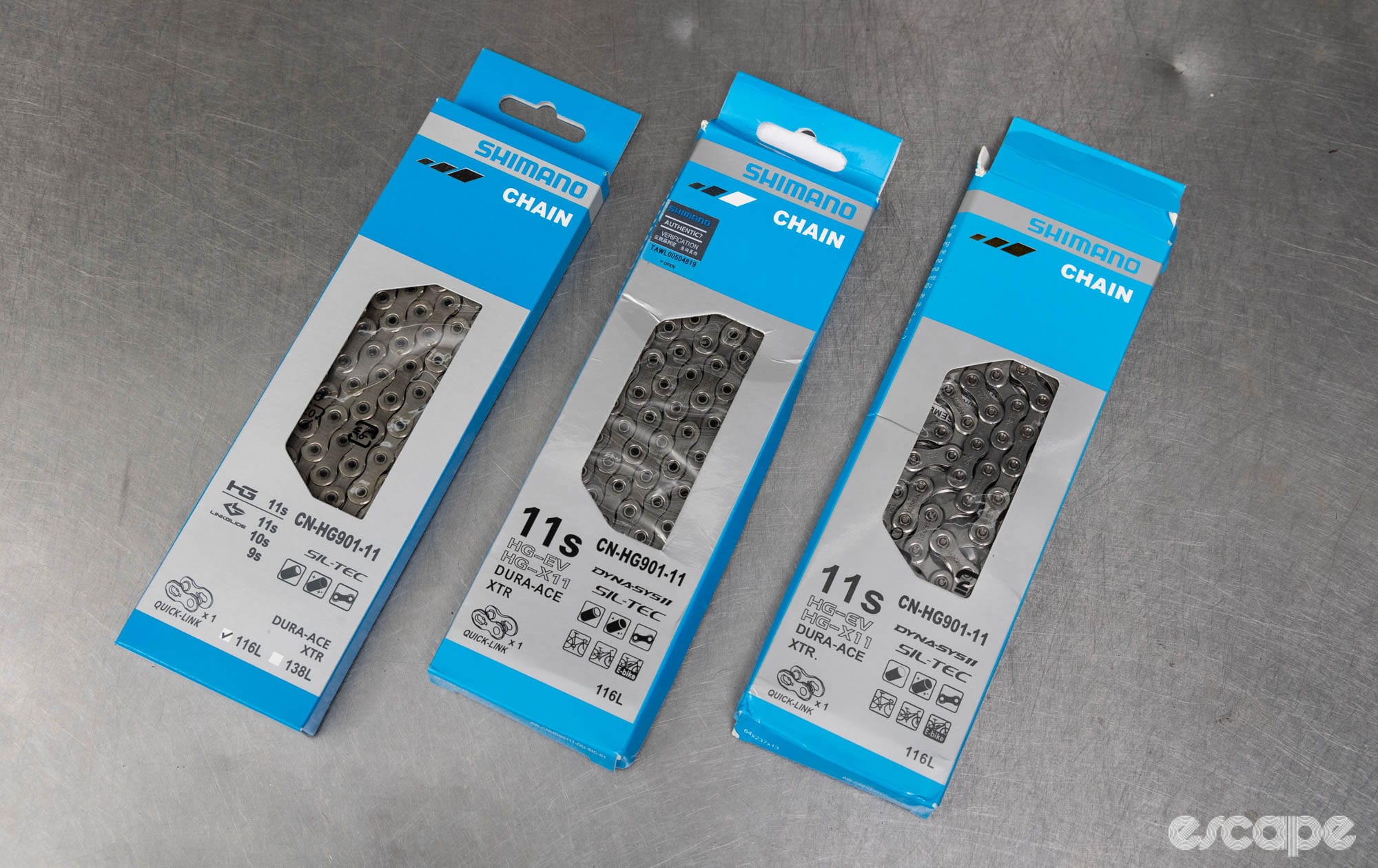
Upon receiving the counterfeit chains, there were early signs that they were not all that they claimed to be. Both the AliExpress and eBay purchases had a shinier finish to the box, with the glue of one coming apart. Authentic Shimano packaging can be drawn on with a Sharpie pen, while that same pen just smears on the fake packaging.
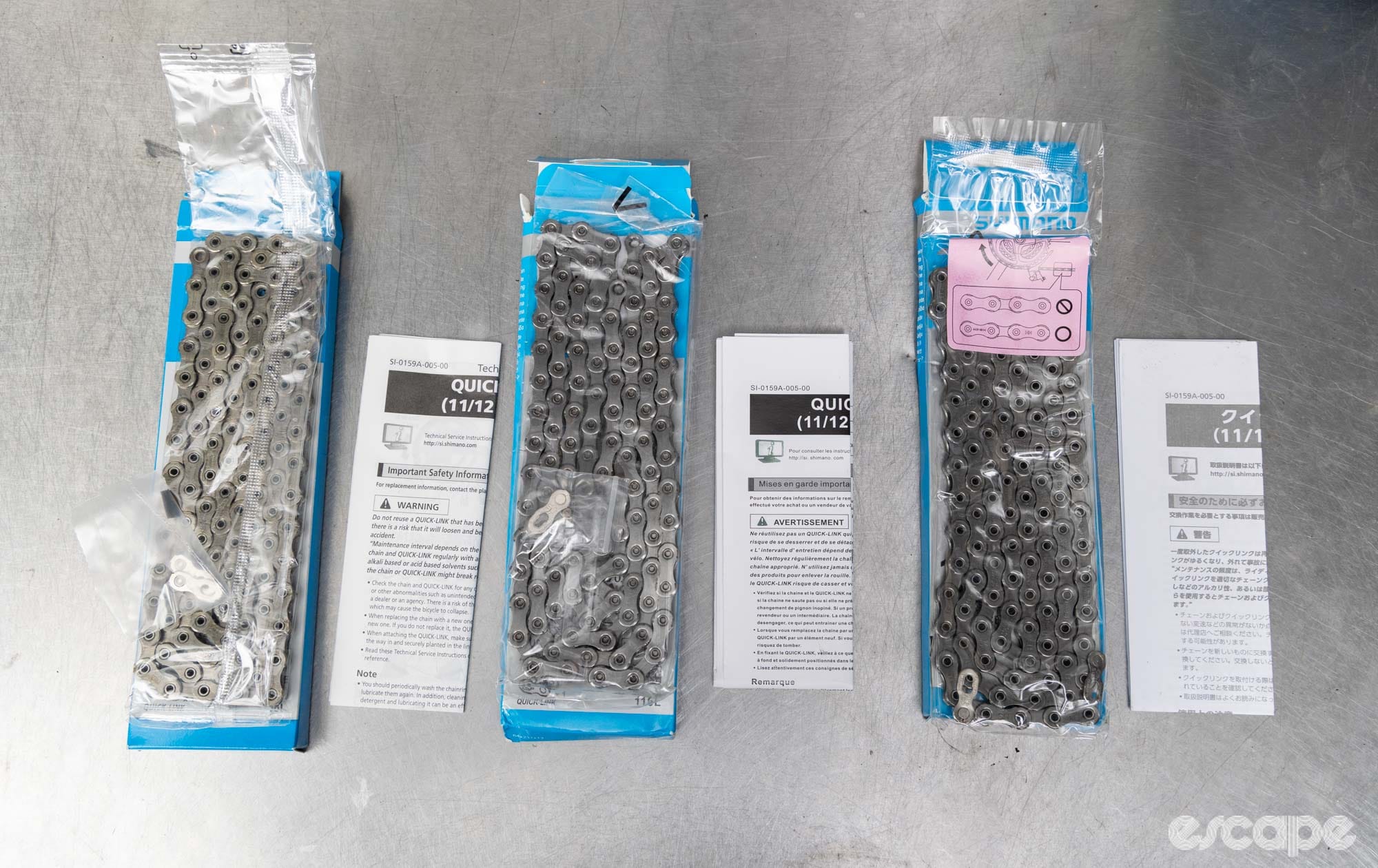
The eBay-bought chain had a sticker and barcode claiming it was an Authentic Shimano product, a system that Shimano has started to implement in certain regions of Asia to ward off counterfeiting. Ironically, the authentic, Australian-sold chain had no such sticker. Meanwhile, the UPC barcode on the back is in sticker form for the authentic chain, while it’s printed straight onto the packaging for the fakes.
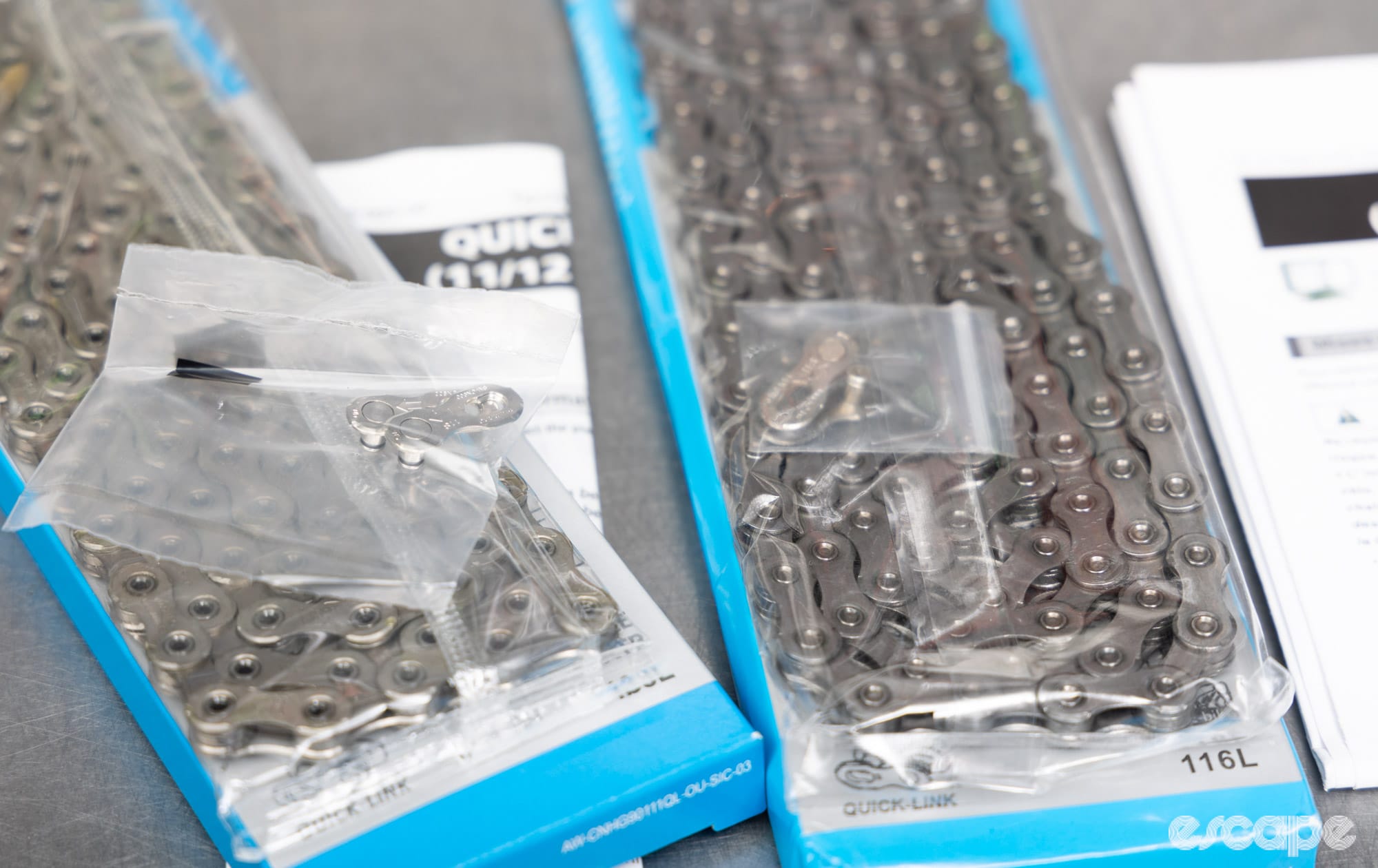
Within the cardboard boxes are more differences between the real and counterfeit options. The sealed plastic around the chain is different, but most apparent is that the quick links of authentic Shimano chains are packaged separately, while both counterfeits had the master links in the bag with the chain.
Measurements
The Shimano HG-901 is a premium-level 11-speed chain with consistent chrome and hollow chain pins. The eBay-purchased chain was a close cosmetic match in this regard, while the AliExpress chain had the red flag of no hollow pins.
There were some dimensional differences with, once again, the AliExpress being a poor copy, and the eBay version being surprisingly close. Here, the AliExpress, Ebay, and authentic chains had roller diameters of 7.7, 7.65, and 7.65 mm respectively. Measuring the chain width (at the centre of the pin) revealed the AliExpress option to be the widest at 5.77 mm, while the eBay chain and authentic option measured 5.68 mm and 5.67 mm respectively.
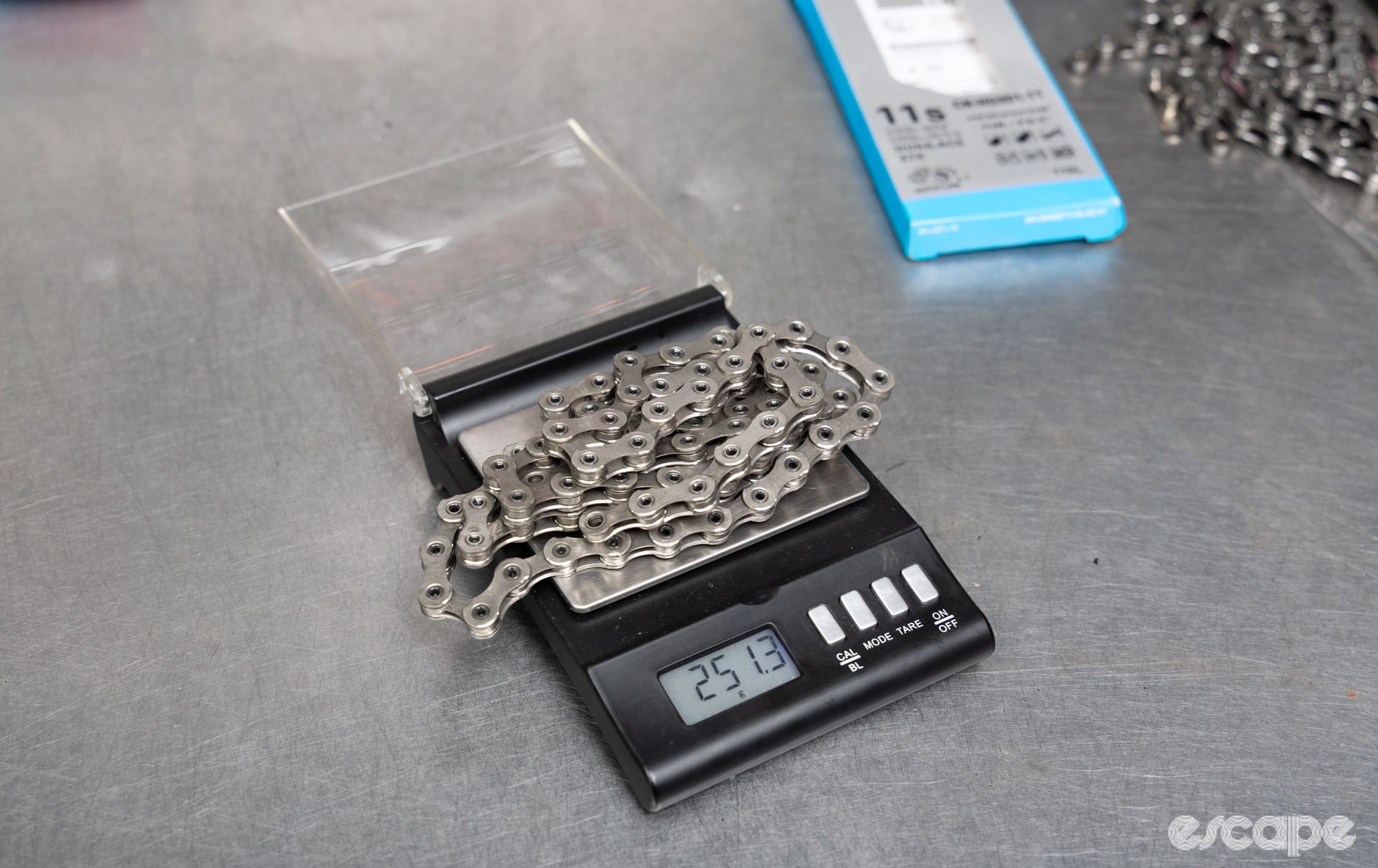
On the scales, the 116-link eBay chain was 245.2 g, AliExpress was 260.5 g, and the authentic HG-901 chain was 251.3 g.
Differences appear before the chains are even used.
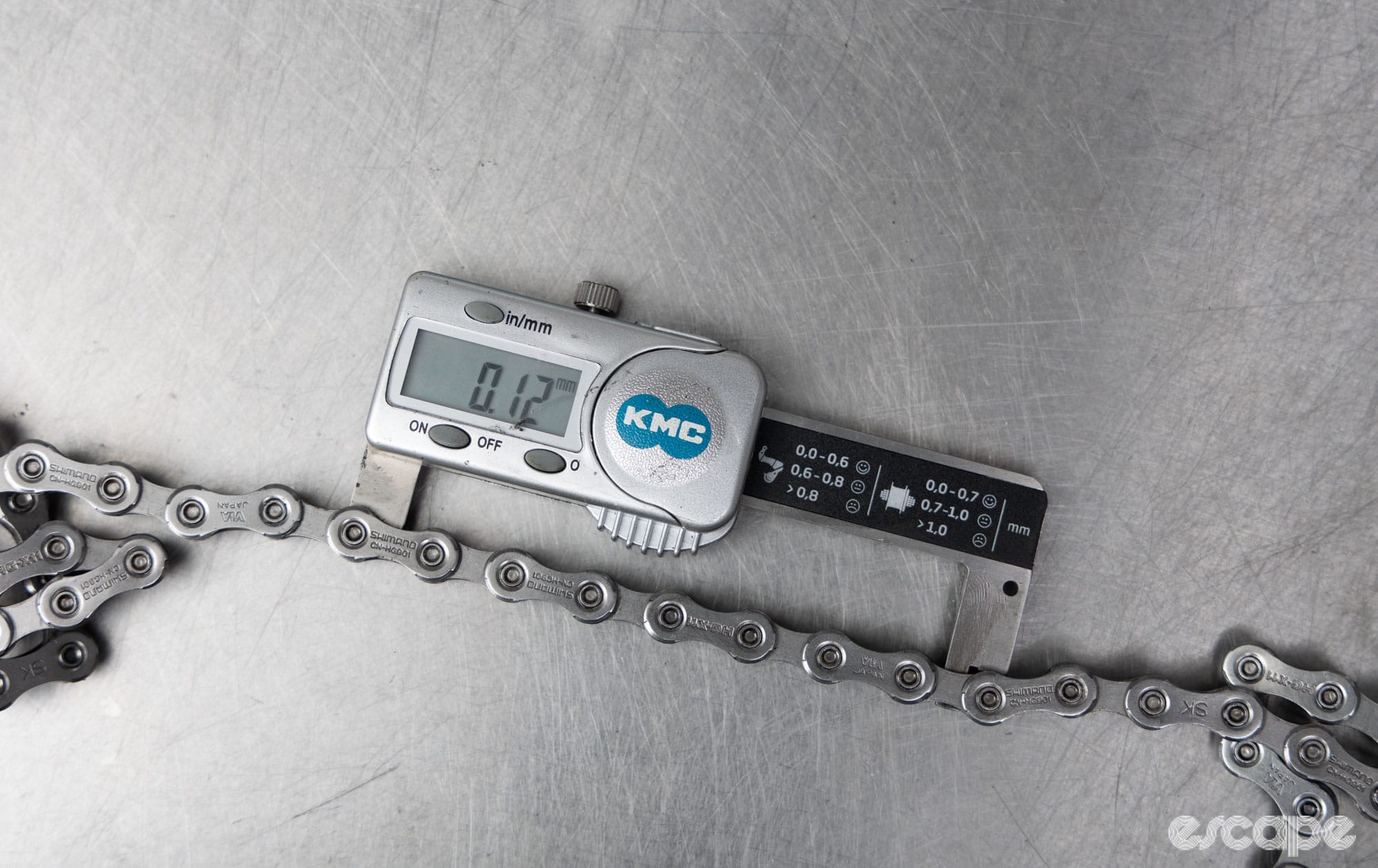
Chain wear is something that should occur through use, but it’s not uncommon to see lower-end chains measure as worn when brand new. Using a KMC digital chain checker, the authentic chain measured as having 0.00 mm wear – a consistent figure for this model of Shimano chain in my experience and what you would expect a new chain to measure. The eBay chain measured at 0.03 mm – close, but not perfect. The AliExpress chain, once again, wasn’t even close, measuring as 0.12 mm worn (despite its larger rollers which should reduce the figure). That's a fifth of its total wear allowance, before even being installed.

Like what you're reading? Escape Collective is 100% membership-funded, with no advertising and no affiliate links in our product reviews. Our work is only possible through the support of our members.
You can continue reading this article by simply joining our (free) mailing list.
Durability testing
When it comes to testing chains for durability, there’s really only one person to call – Adam Kerin of Zero Friction Cycling. Kerin has built a business through independently using chain wear as a way to gauge the efficiency and running costs of various chain lubes.
I’ve worked on a few projects with Kerin over the years, mostly back at CyclingTips, including an original feature that revealed the correlation between friction testing and wear testing in finding a good chain lube. We also worked on finding the best chain from a durability perspective. By contrast, this test of fake chains is a lot smaller, but the findings are no less interesting.
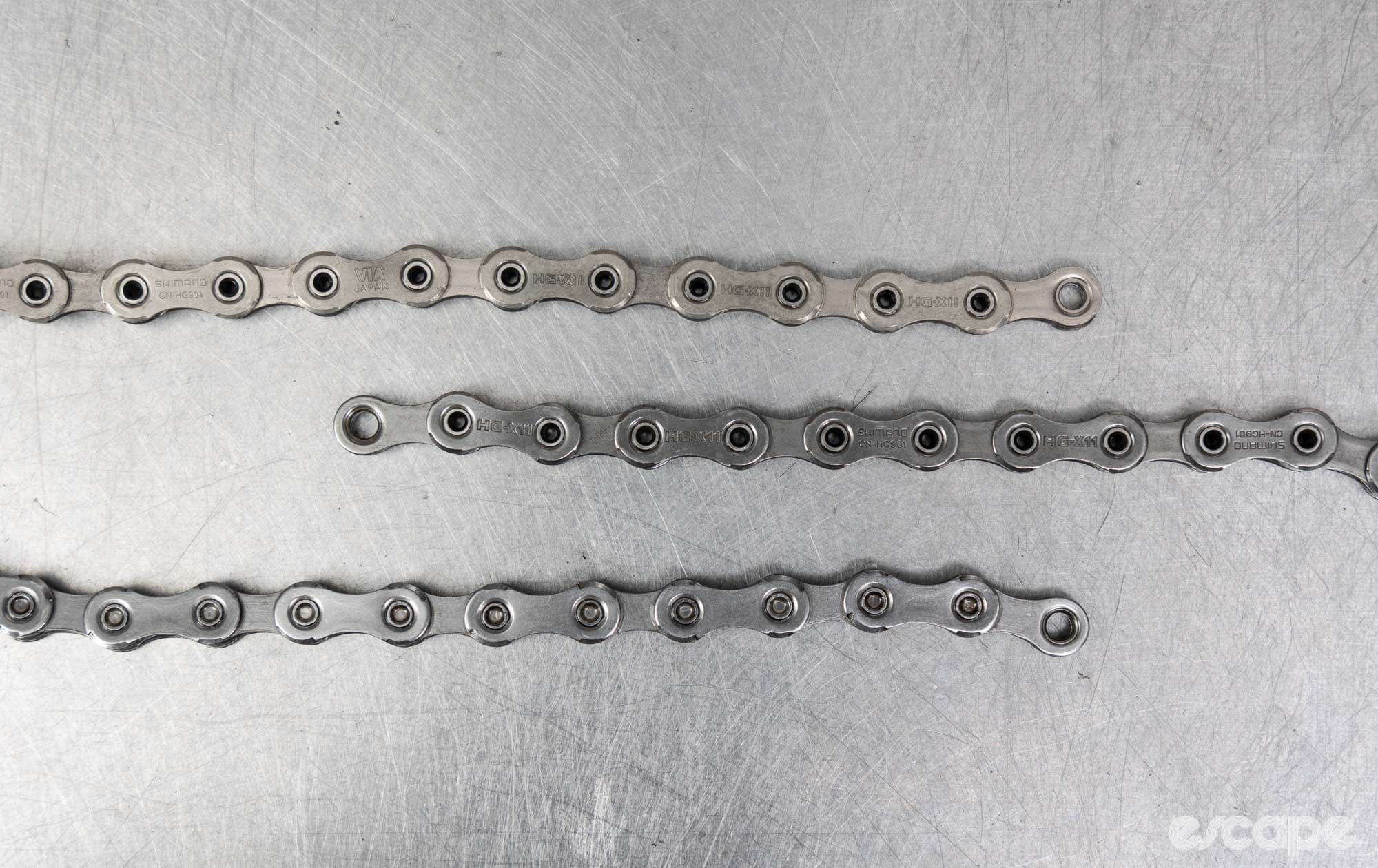
Kerin subjected the three submitted Shimano HG-901 chains to Zero Friction Cycling’s usual controlled test that involves a 250-watt motor-driven load turning the drivetrain of a road bike on an indoor trainer. The chains are subjected to a torturous series of 1,000 km blocks that aim to simulate real-world usage. Like all of Kerin’s tests, the chains are stripped back to bare metal before being bathed (using an ultrasonic bath) in the control lube, with Finish Line Dry picked for this test. That lube was chosen because it remains a popular choice in the market, and also because it would act as a wear accelerator to reduce testing time. A chain is considered worn when it reaches 0.5% elongation.
Did we do a good job with this story?