


Punctures, rattles, loose thru-axles, tubeless failures, a bottle cage bolt that mysteriously vanished on a washboard descent – none of these are rare occurrences when you ride a lot. And when they happen, the first thing you think – or should think – is "how do I fix this?"
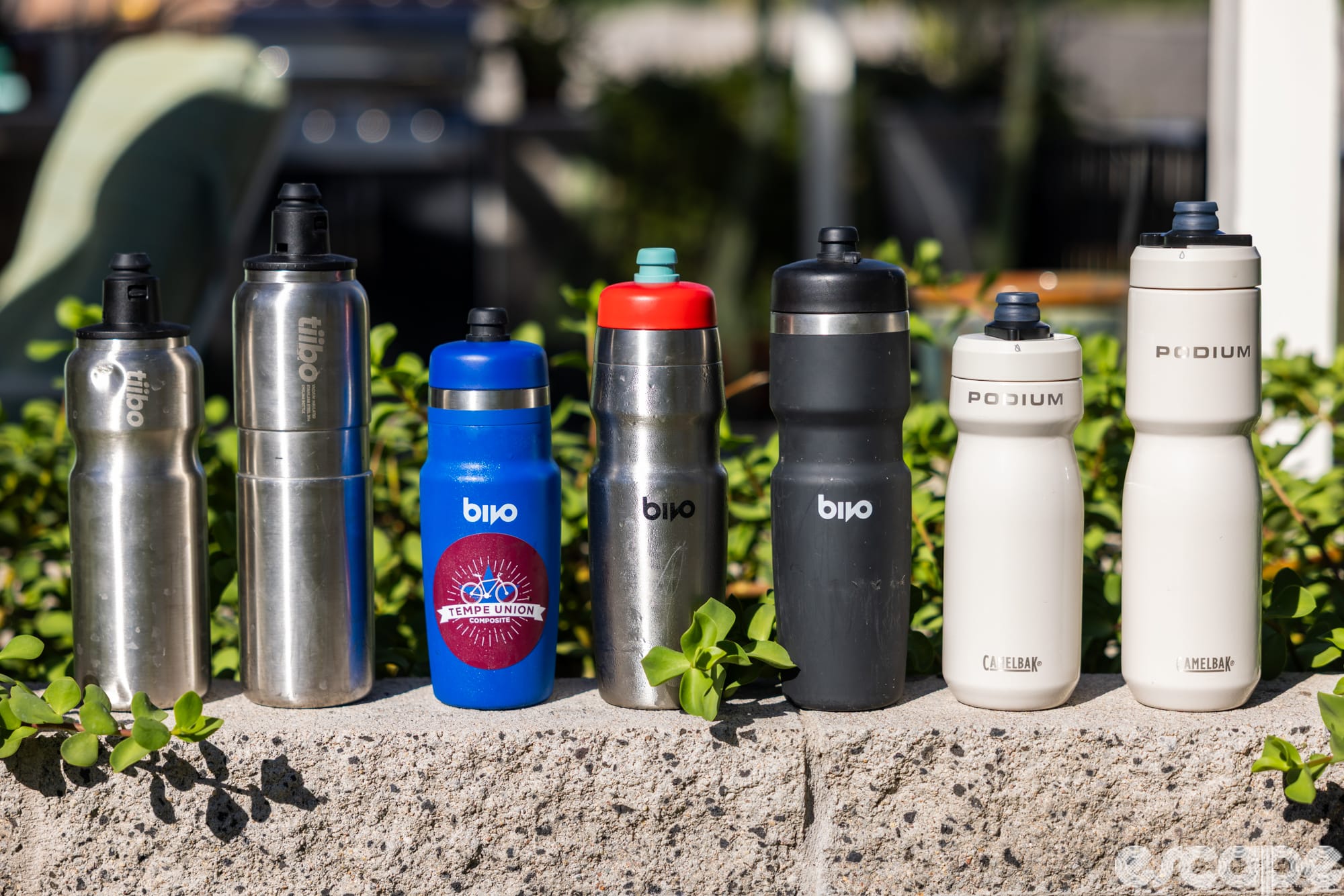
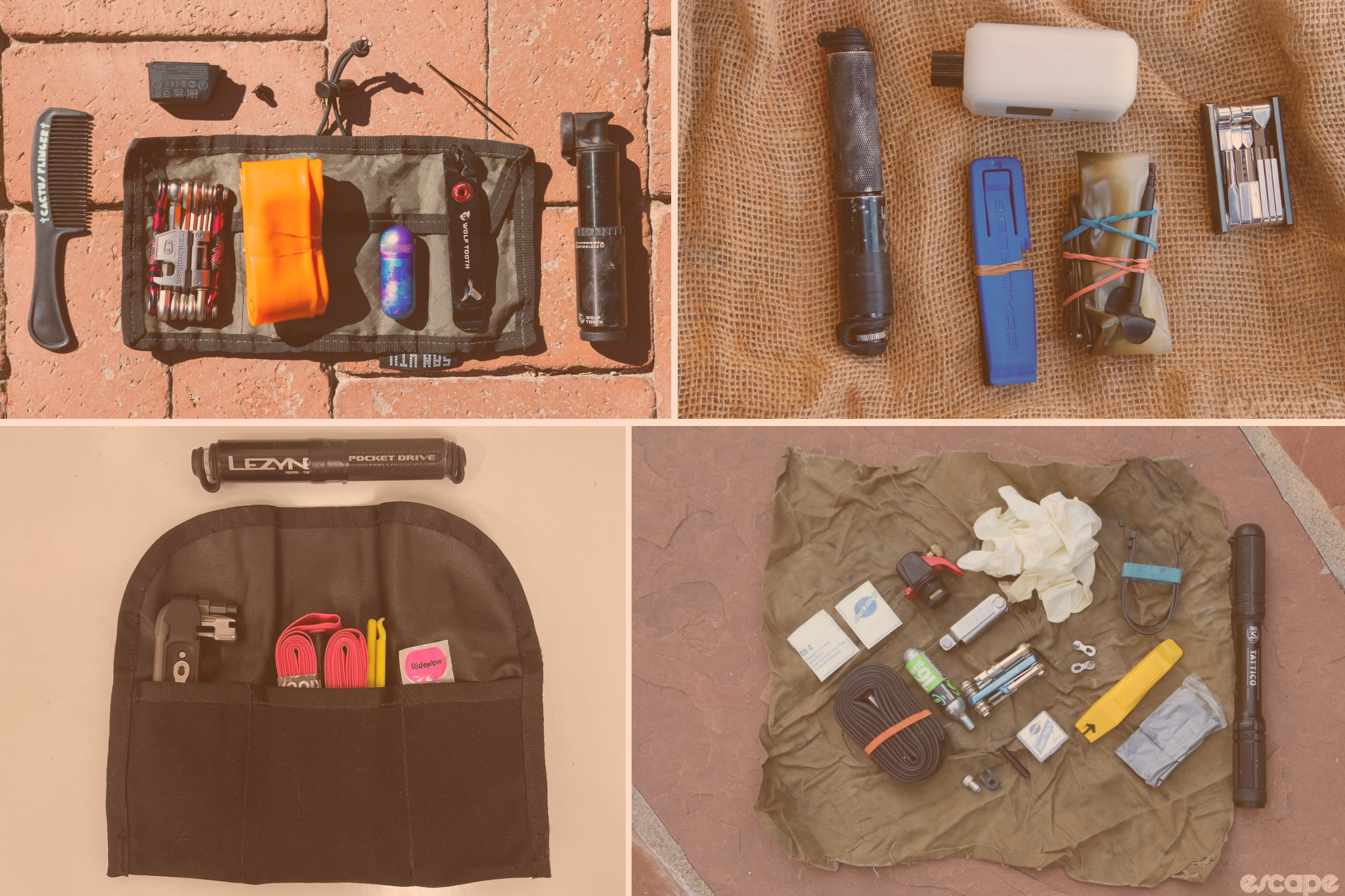
That's where your spares kit comes in. We've already looked at our favourite saddle bags as part of our Collective Favourites series; so this time we're tipping them inside out. What actually gets a space in those socks, rolls and bar bags? As always, we also asked our members for their favourites, too.
The basic kit
Every spares kit starts with the same core capabilities: a way to inflate, a way to seal or patch tyres, and a way to tighten and loosen the bits that come loose on bikes. Because these tools and spares live in a jersey pocket, saddle bag, or hip pack, they need to be compact in size.
Inflation
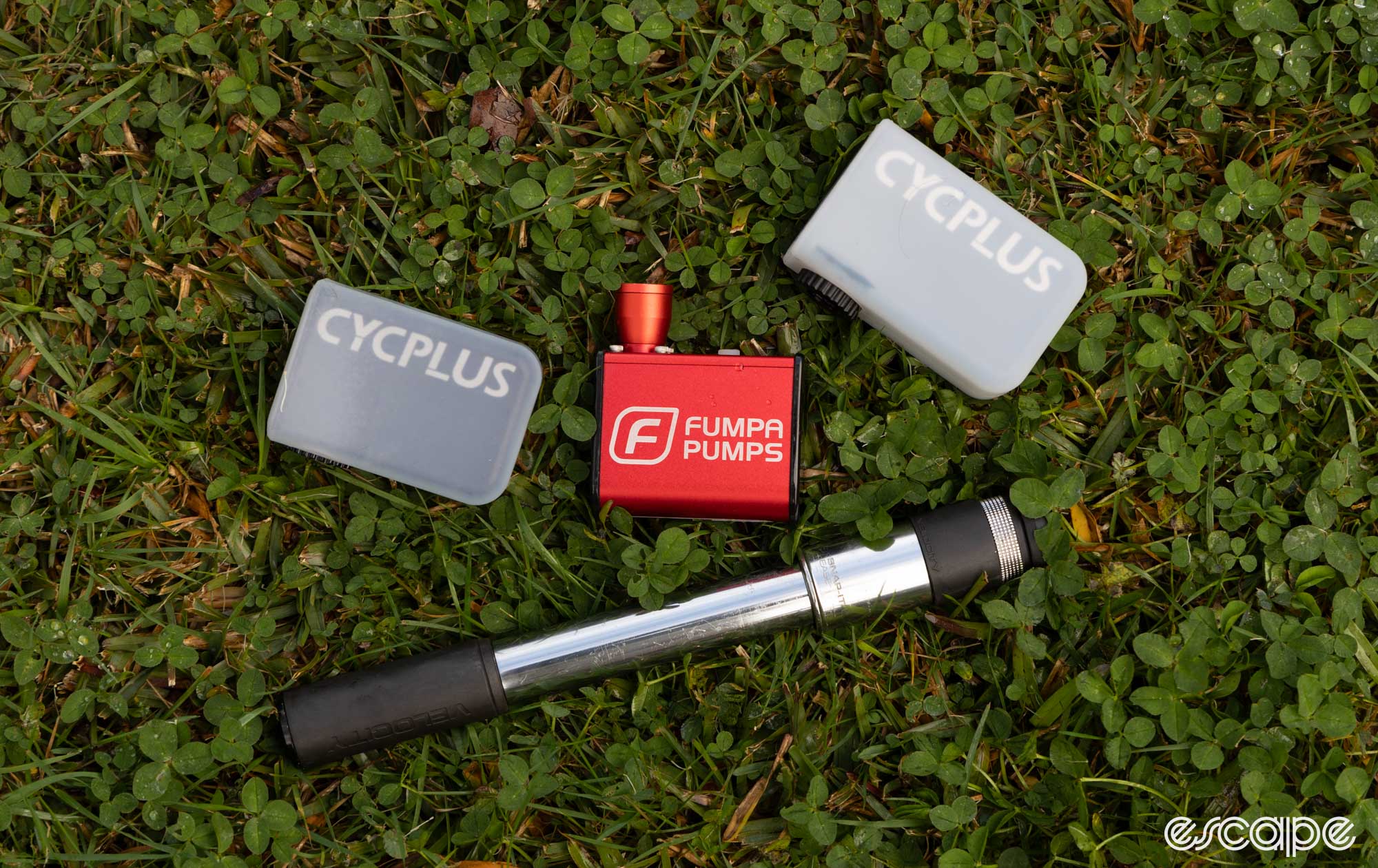
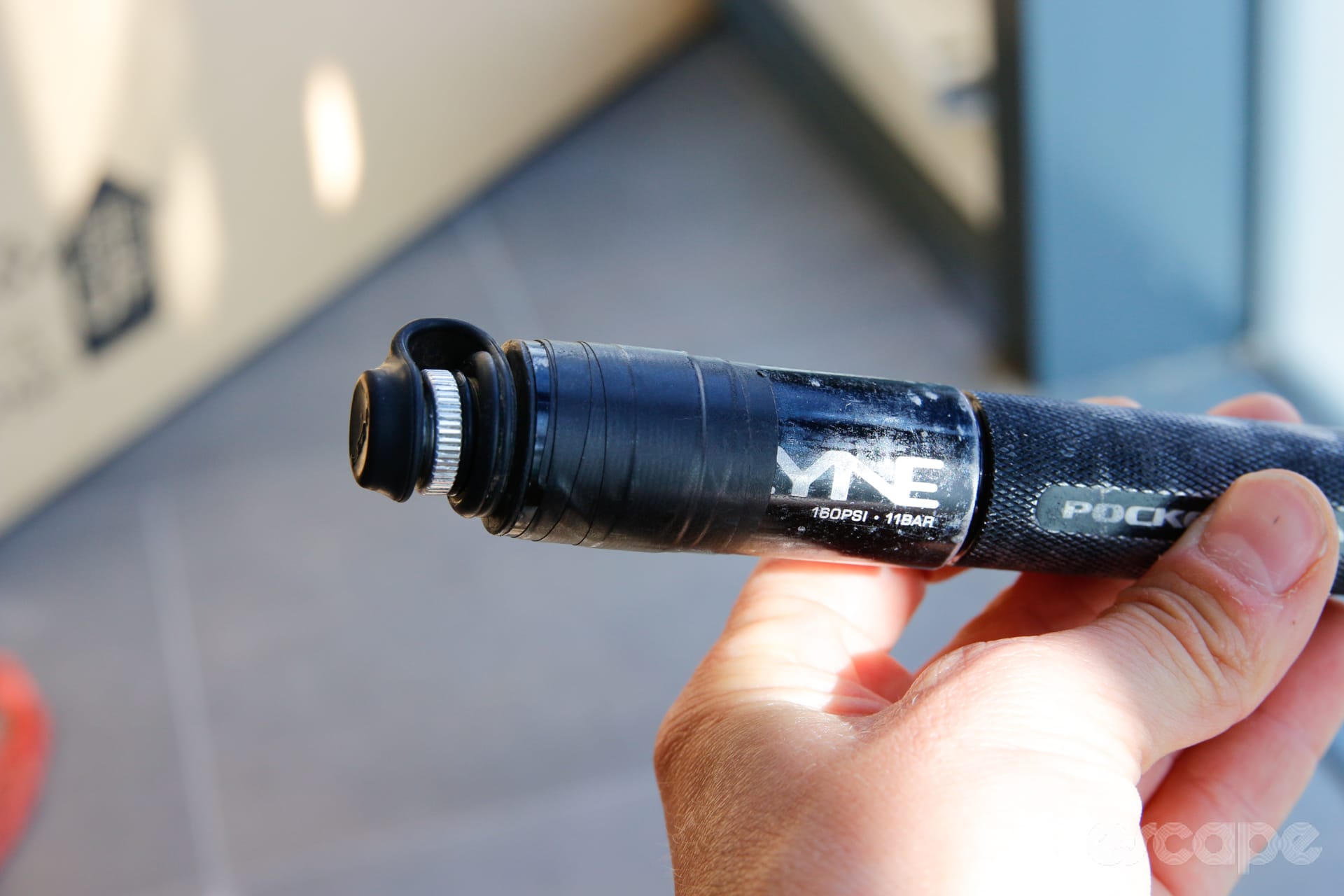
Inflation means a mini pump for most riders. A decent pump is endlessly reusable and can't run out of air like CO2 canisters or have a dead battery, which is the downside of electronic inflators.
 Dave Rome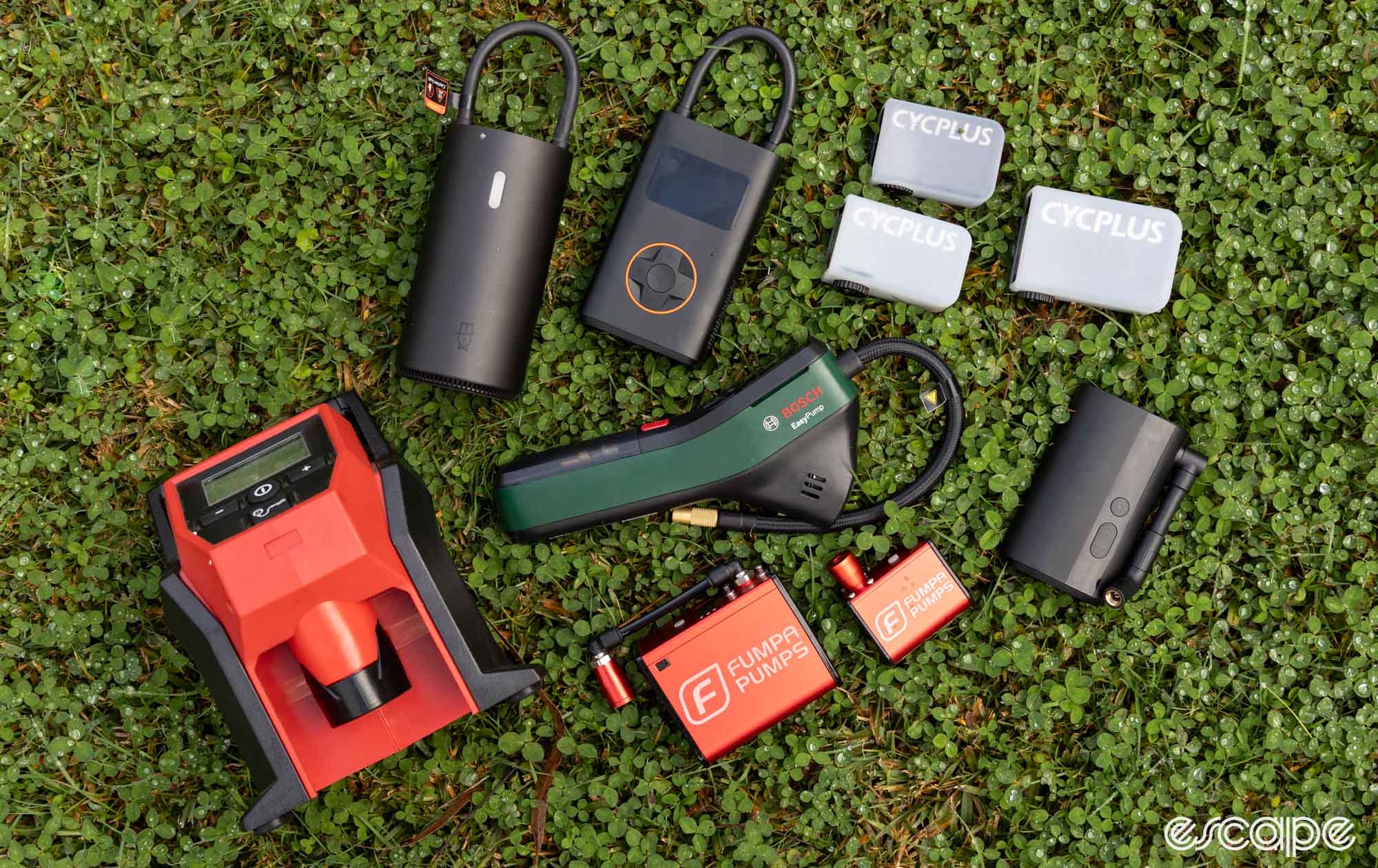
Many riders still favour CO2 for the speedy inflation in race situations, and compact electric pumps can spare your arms and add a pressure readout. Whatever you choose, it's good to learn to use the pump at home so you know it works with your valves.
Tubes and tyre repair
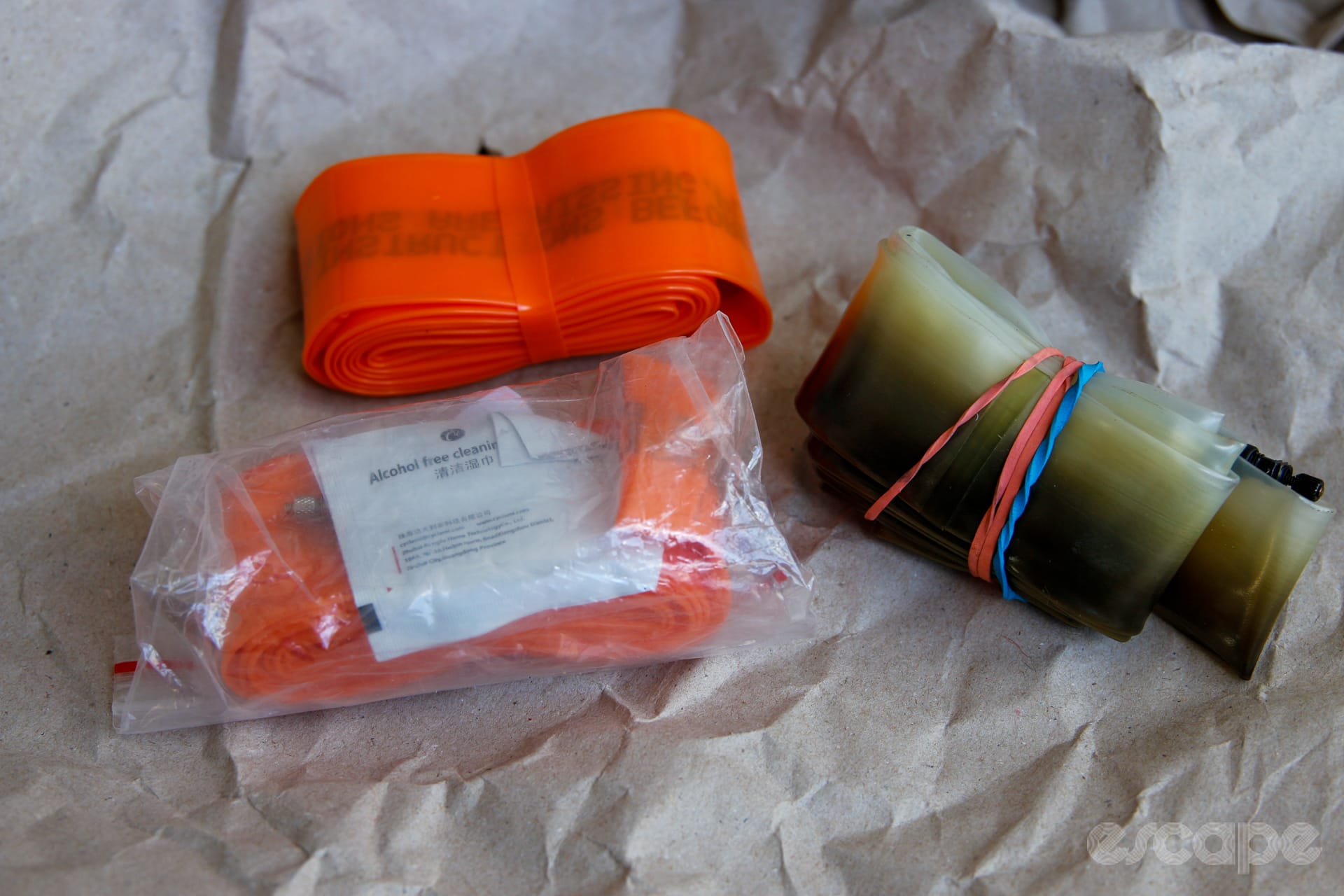
Most of the time, you'll reach for a pump during a ride because of a puncture or a slow flat. If it's a puncture, then your spares requirements depend on whether your setup is tubeless or tubed.
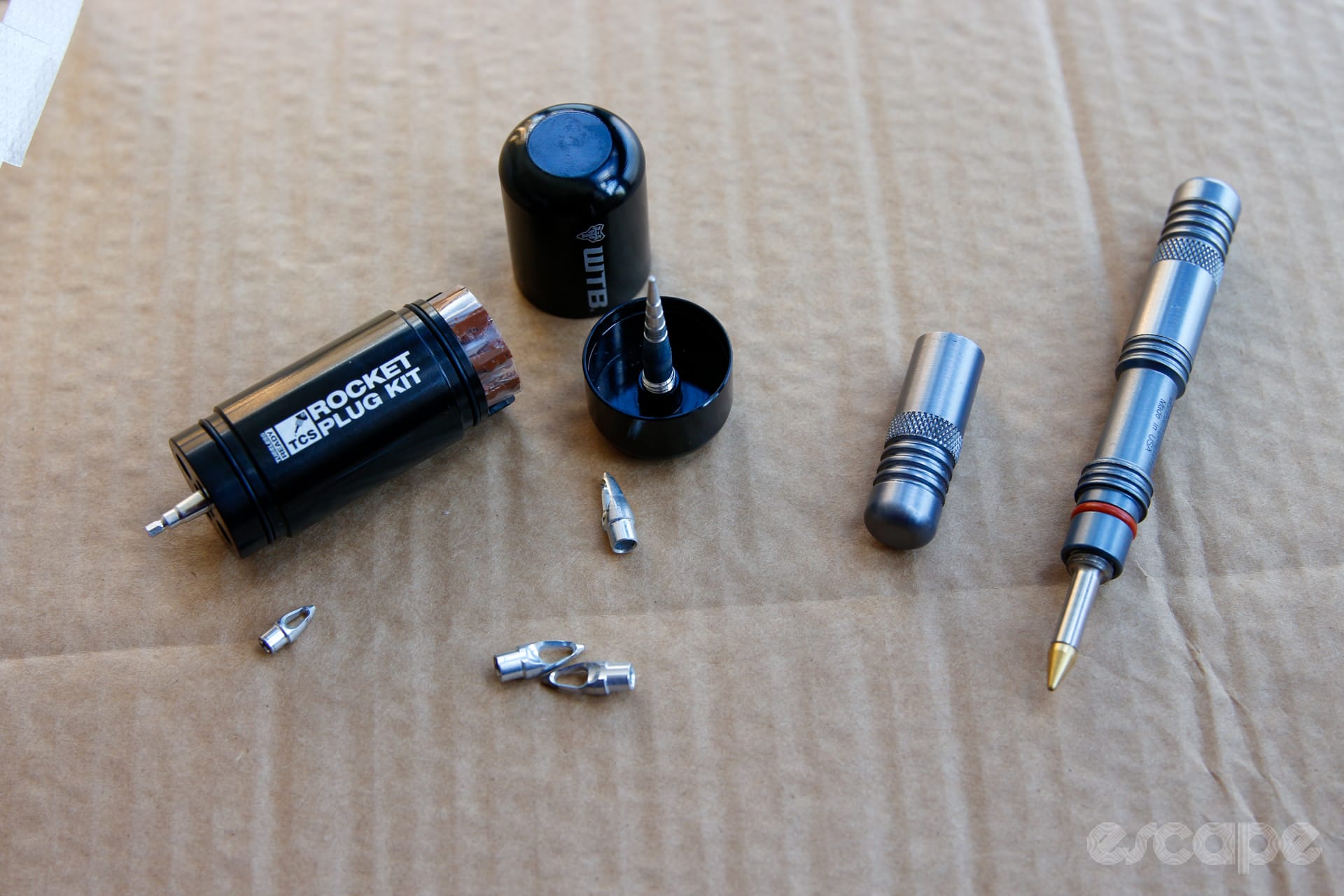
For tubeless, if the sealant isn't enough, then you need to use a plug kit that comes with a fork tool and a few sizes of "bacon strips." This is one of the most affordable ways to seal anything bigger than a thorn hole. These tubeless plugs, do age once unwrapped; if they're dry, replace them.
If you ride tubes instead, then you will always carry a spare tube, and preferably a patch kit, as well. There are a few different tube options, from the more traditional butyl tube to latex and TPU tubes. Butyl tubes are the heaviest, and if rolling resistance is something you care about, they're not the fastest option. They also don't pack as small as a TPU tube does, but on the upside, they're the most affordable and are widely available at even the smallest bike shops. In certain countries, they're even found at large supermarkets, and there is a butyl tube to accommodate pretty much any tyre size there is.
Latex tubes are a little lighter, more expensive, and in most tests, have less rolling resistance than their butyl and TPU counterparts, but they can be more difficult to patch. You might struggle to find them as easily as butyl tubes, but they are still cheaper than the third option: TPU tubes. These lightweight tubes have quickly become the go-to spare tube for many riders, as they weigh barely anything and pack extremely small, making storing them easy.
However, TPU tubes are also very fragile, and some of them tend to develop issues around the valve. Because of their delicate make, they can also easily get punctured even when just stored near sharp items in a bag, so keep them wrapped in a layer, whether in a plastic bag or a spare disposable glove.
You need to make sure that your tubes fit your tyres and wheels, too: deep-section rims may also require a valve extender for tubes, or you need to buy long-valve tubes in the first place. Butyl tubes can stretch a little beyond their labelled width, but the same can't be said for TPU tubes, so you might need to change the tubes you carry if you change your tyre size.
Related to tubes and tyres, it's worth having a valve core tool with you, as well, in case the core comes loose with your pump, or if you need to replace it – in which case you should have a spare valve core with you, too.
Multitools, minitools
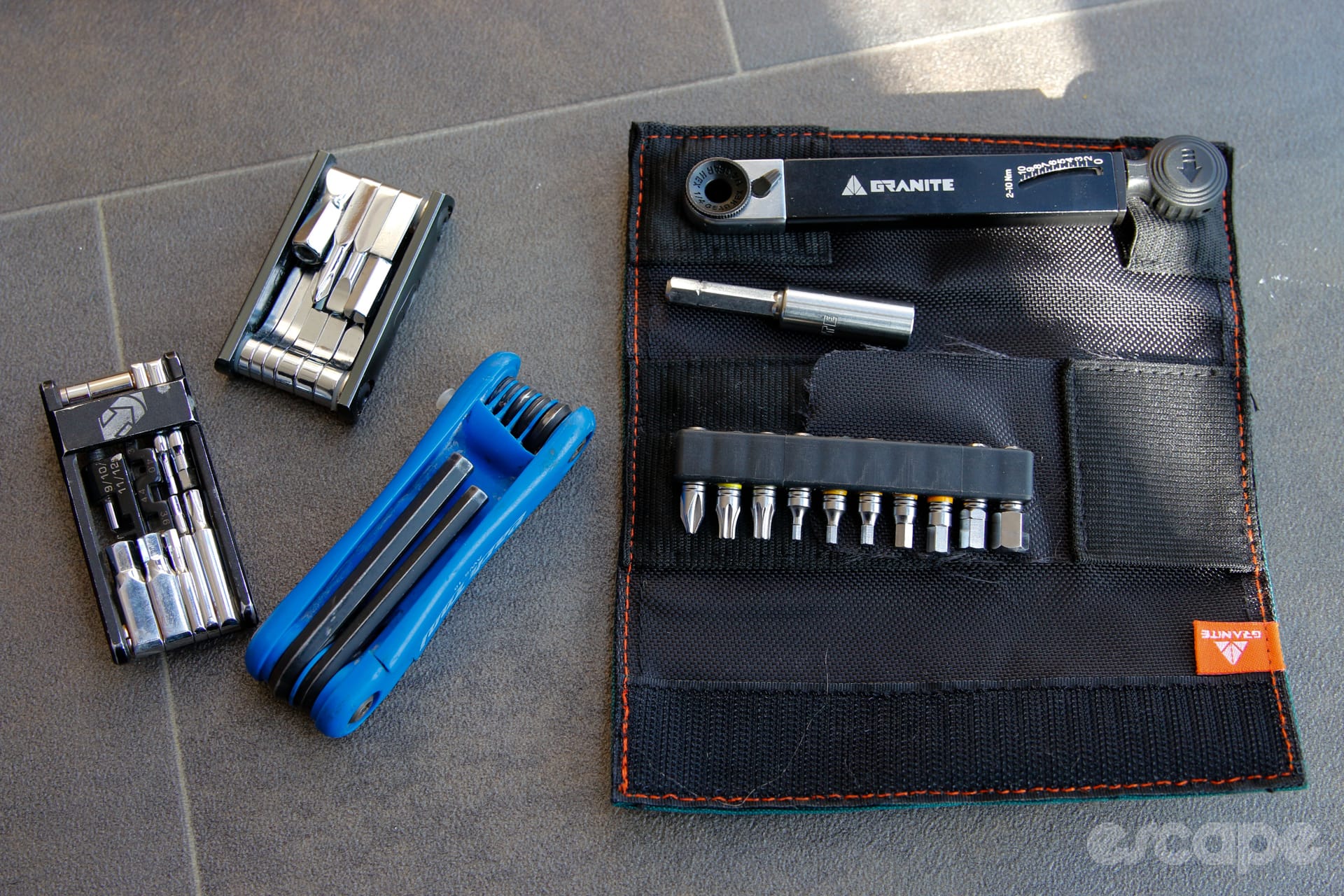
Multi-tools, often also called mini-tools, are a key item in anyone's spare kit. Essentially, these are small tools that combine many full-size things in a more compact size. They can be used to take wheels off and put them back on, tighten and loosen bolts, and even do many other small jobs.
The useful ones have hex keys in the sizes you actually need – all 2–8 mm hexes, as well as T25 and, on some bikes, T30 heads. Mini tools come in many different shapes, but usually they either fix all the tools around one or two spindles in "fold-out" style, or give you the bits and a driver.
The bits-and-driver styles are generally more expensive but of better quality. Additionally, they offer better leverage in tight clearances, but on the other hand, the loose bits are easy to drop and lose on a verge. Fold-outs don't lose the tools quite easily, unless the tool itself rattles loose, which it can do.
You can find multitools with anything from three to a couple of dozen features, but here, more is not necessarily better. To get a good purchase on the bolt head, get a good quality tool with ergonomics that work for the intended purpose; the smaller the tool, the less leverage you have, but the larger the tool the more difficult it may be to fit into tight spaces.
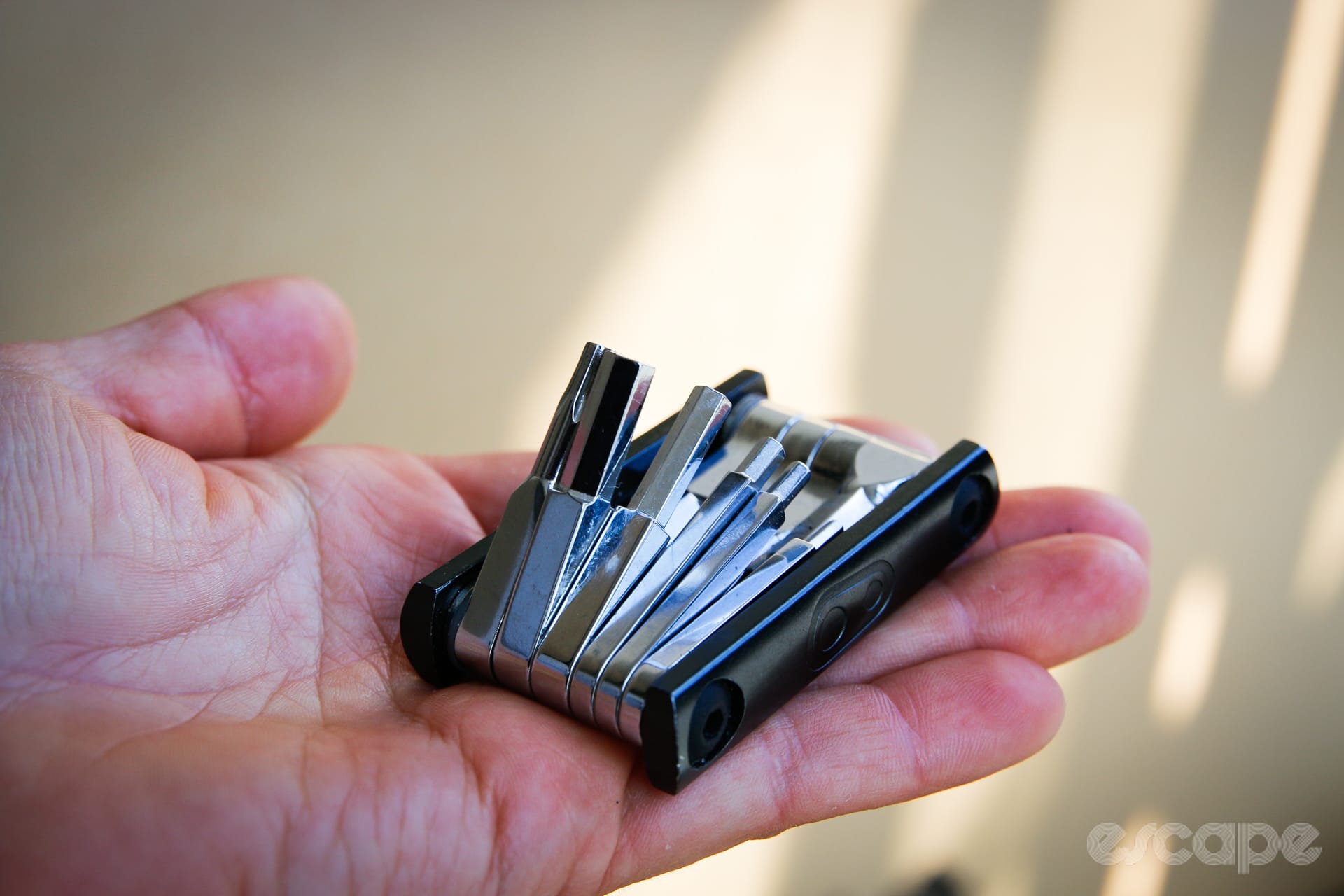
Above all, it's important you test your tool at home on every bolt you might touch; if it can’t reach or can't undo your bolts, it shouldn't be in your saddle bag.
Multitools can also feature a chain breaker, valve core tool, tubeless repair kit, or many other features. Whether you want these depends on your tool kit size and your own preference - chains might not break often but when they do, it might be right over if you can't fix it.
Additional bits that can save the day
In addition to the simple basics of a spares set, there are a lot of smaller, less obvious things you can easily carry with you, and that can come in handy on any given ride.
Did we do a good job with this story?