
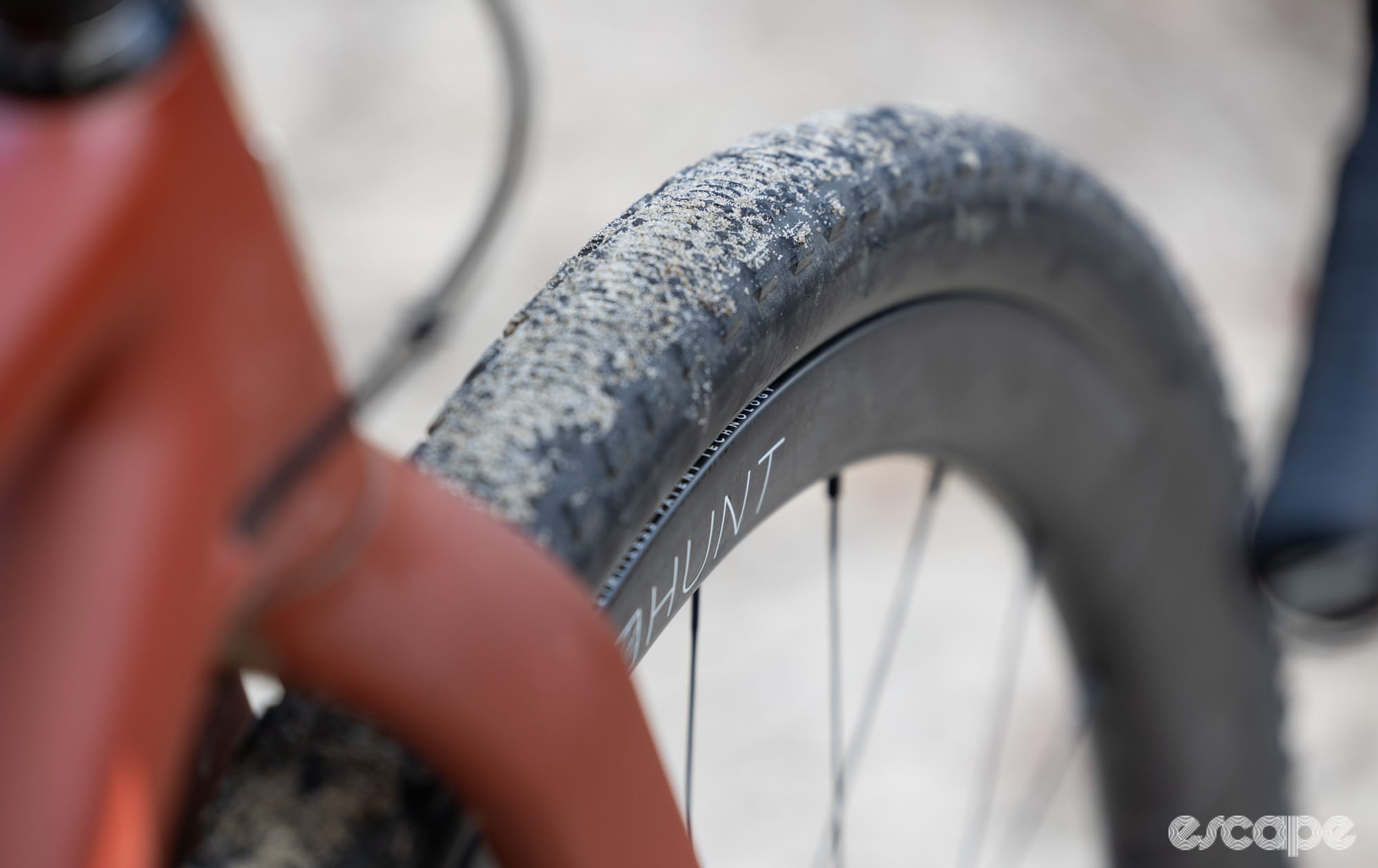


Aero gravel has become a trendy term in recent years. For those using a gravel bike for fast-paced mixed-terrain group rides, or perhaps racing, the pursuit of improved efficiency is an attractive one. You’ll find the 'aero gravel' term plastered across all sorts of products, but not unlike on the road, it’s the wheels that can offer a tangible performance-to-price benefit.
The consumer-direct wheel specialist Hunt is no stranger to mixing aero and gravel together. Almost five years ago the brand launched its 42 Limitless Gravel Disc, a 25 mm internal width wheelset that is aero-optimised around 38-42 mm tyres. However, things have moved quickly in that time. Since then, we’ve seen Zipp release its yeesh-that’s-wide 303 XPLR wheels, Light Bicycle follow suit, and with countless other options remaining at 25 mm internal or somewhere in between.
 Dave Rome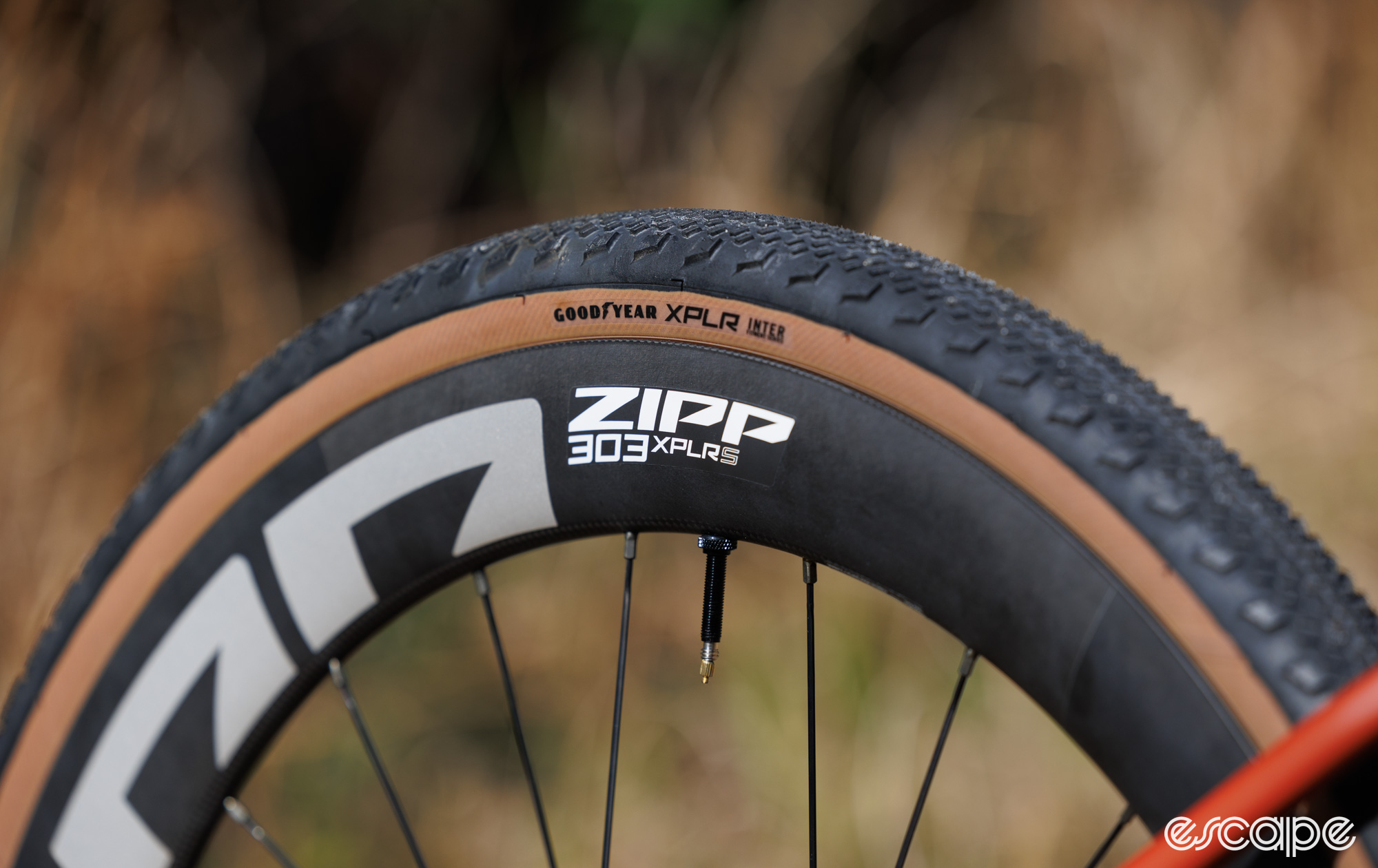
Late last year Hunt overhauled its flagship aero gravel option, now named the 40 Limitless Gravel Aero. The new 700c wheels increased the internal rim widths to 27 mm front, 26 mm rear, dropped the hooks in the process, and gave it a new rear hub. I’ve spent some six months testing these wheels with various tyres across a few bikes and they’ve been flawless in that time. This review digs into where Hunt got it right, some compromises to note, and a little discussion on where the sweetspot of gravel rim widths may lay.
Highs: A practical level of increased width, competitive weight, surprisingly good stability, and an improved rear hub.
Lows: Internal width and hookless lock these into being gravel wheels or for ultra-wide road tyres, so-so tubeless rim tape install, provided wheel bags don’t zip up with tyres installed. Be aware of local taxes, duties, or tariffs that may affect the value on offer.
Pricing: Starting from US$1,849 / £1,479 / €1,849 / AU$3,096 (as tested).
Aero metrics
Based in the UK, Hunt got its start by rebranding wheels and selling them under its direct-to-consumer business model. That changed with the company’s Limitless range, an in-house designed disc-brake-specific road wheel that combined a competitive internal width with a noticeably increased external width to help retain airflow from the tyre. The blunt U-like rim shaping of Hunt’s original Limitless road wheels inspired a number of competitor products.
Today Hunt’s Limitless range continues with similar concepts and shaping. On the latest 40 Limitless Gravel Aero, you’ll notice a thick, squared-off rim wall that protrudes noticeably beyond the tyre bead sitting within it.
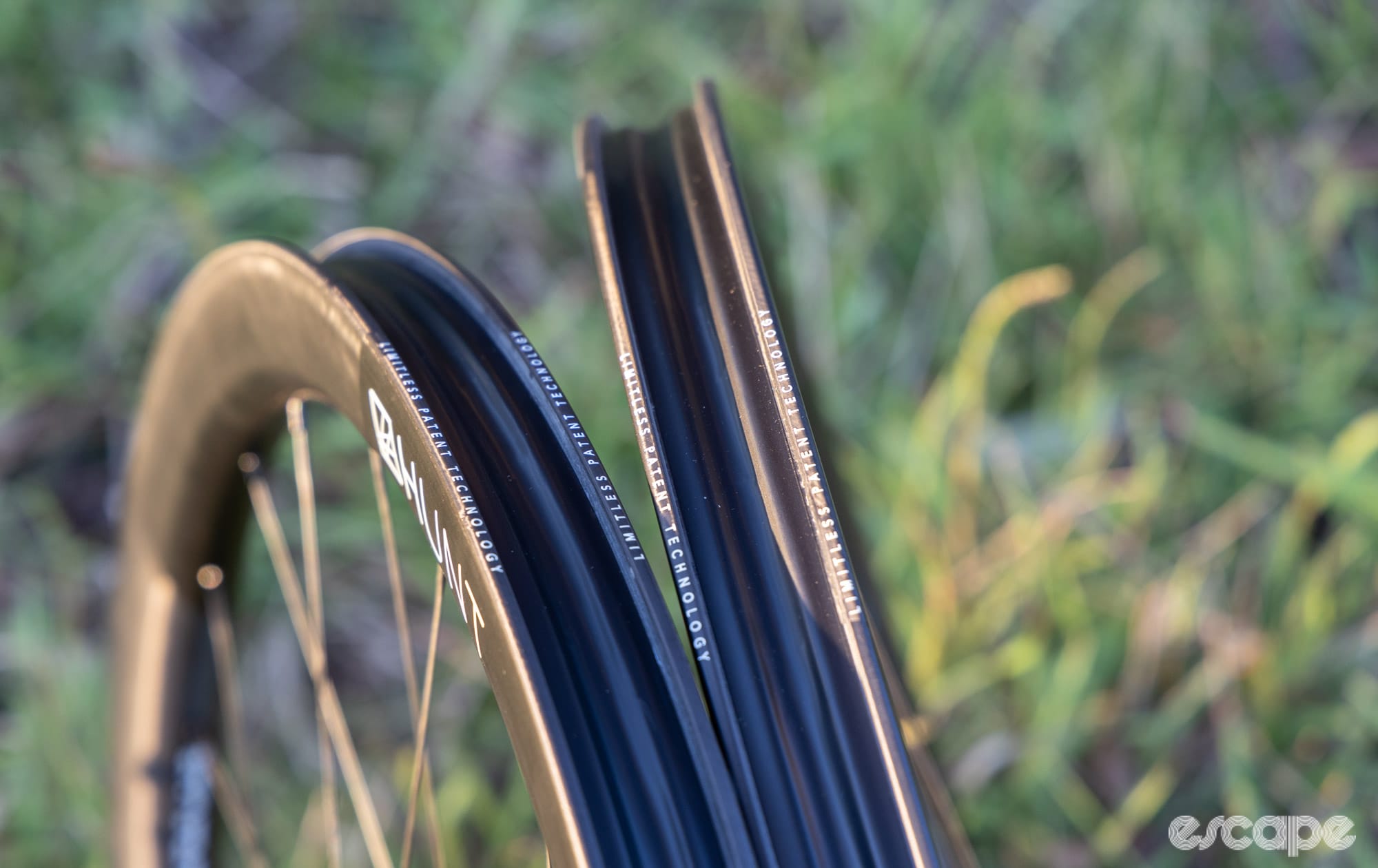
Hunt was once a vocal opponent of hookless rims, and yet its latest Limitless range is, in fact, hookless. While I have my concerns with the technology in regards to road usage, for these tested gravel wheels, it’s of far less concern with the far lower running pressures in use.
These wheels feature front and rear-specific rims with only subtle differences between them. The front wheel provides a wide 27 mm internal width, 36 mm external width, and 40 mm depth. Meanwhile, the rear rim is a single millimetre narrower in and out (26 mm internal, 35 mm external), while also increasing the depth by an extra millimetre (41 mm).
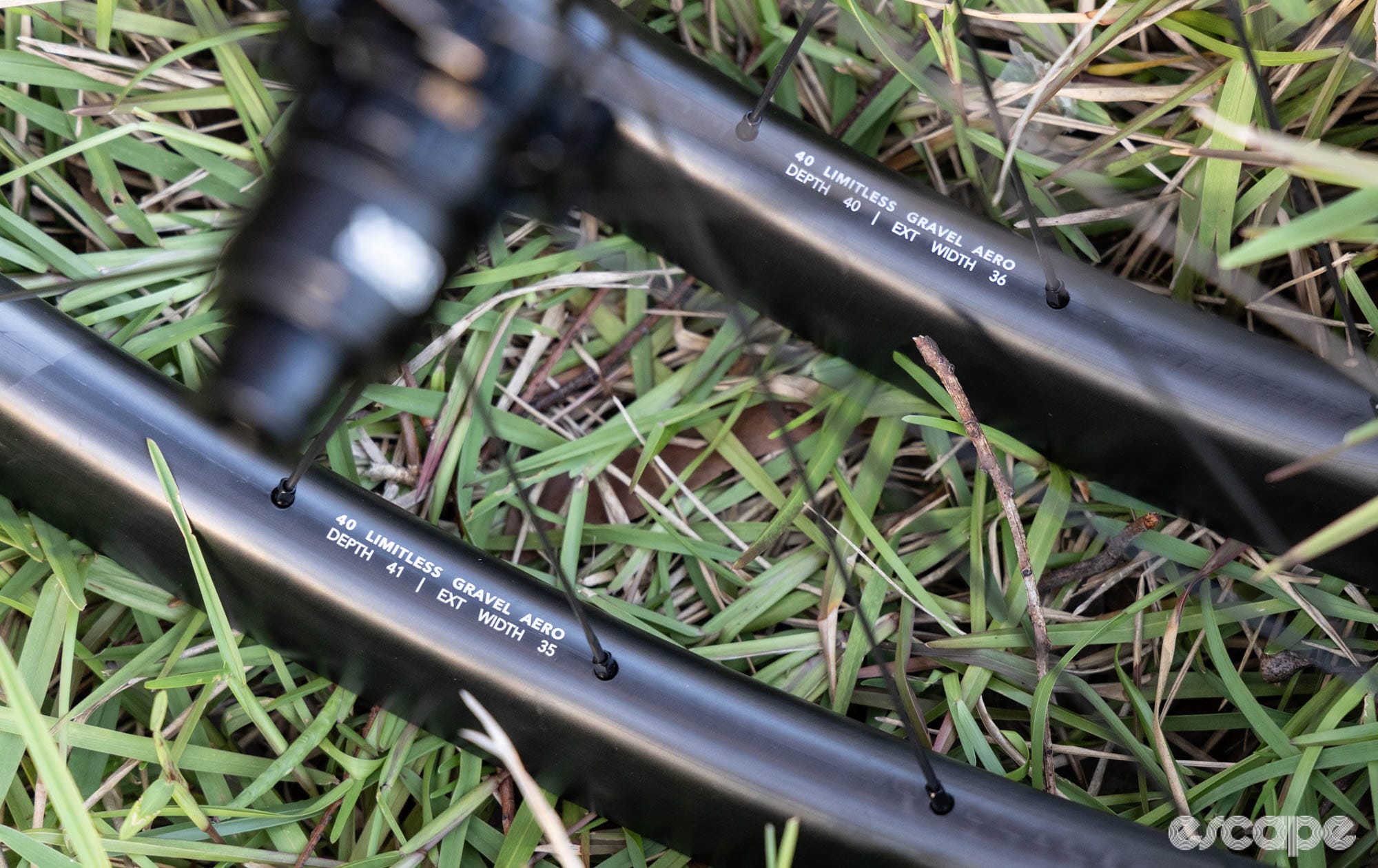
That inner-to-outer width differential results in a 4.5 mm-wide rim bead that not only provides more material to take the hit in the event of a direct strike, but the flat edge greatly reduces the risk of a tyre pinch flatting at the same time. This is a proven concept borrowed directly from the mountain bike world.
Not unlike the Zipp 303 XPLR, these wheels were aerodynamically optimised and wind-tunnel tested with 40 and 45 mm tyres. Like many brands, the trend to tyres of 50+ mm happened suddenly, and Hunt had designed and launched these wheels before the big shift occurred. Still, with the wider rim widths, these wheels are well suited to matching with ever-wider rubber and the rim profiling will still offer an aerodynamic benefit over using shallower wheels, just the gains are likely to be reduced.
Aerodynamic wheels can and do offer real benefits at higher speeds and in the right conditions. However, when you dig into the numbers, the gains between the top contenders are often extremely marginal, even approaching the margin of error for the test. From my perspective, Hunt has a history of doing transparent and intentionally honest wind tunnel testing, and in the white paper the company published for these wheels, they’re competitive to a number of known-fast wheels, only beaten by the far heavier 3T Disqus 45/40 when fitted with a 45 mm tyre. As you'll see, there's not much daylight between the yaw-averaged drag numbers.
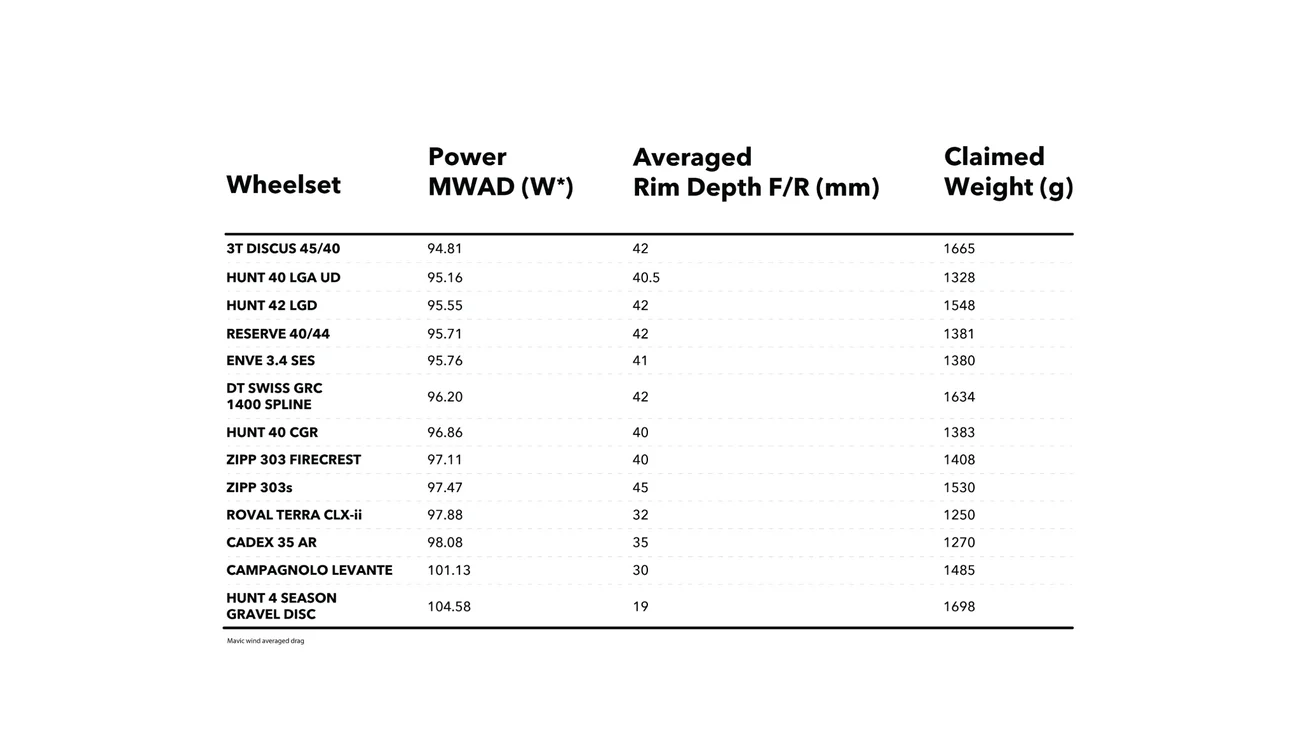
It is worth noting that new competitors are continually entering the market, which may sway these rankings. For example, the Zipp 303 XPLR wheels weren’t available when Hunt conducted its test. I could write plenty about what’s written in the test, but frankly, the differentials are marginal and are likely to swing simply by changing the tyre or potentially even the frame they’re put in. As we (Escape Collective) haven’t done our own testing to confirm or deny the findings, I’ll just point you to Hunt's own paper for more information.
Compatibility explained
In my review of the Zipp 303 XPLR wheels I wrote about how the 32 mm internal rim width felt excessive for the application and created all sorts of compatibility concerns when following the company’s intended tyre widths. By contrast, these Hunt wheels are far closer to convention and carry fewer limitations. Hunt may have designed them around 40-45 mm tyres, but officially the rim widths are suitable for tyres ranging from 35-60 mm (and I’d be willing to go a smidge wider, too).
Did we do a good job with this story?